What Is WSCUC?
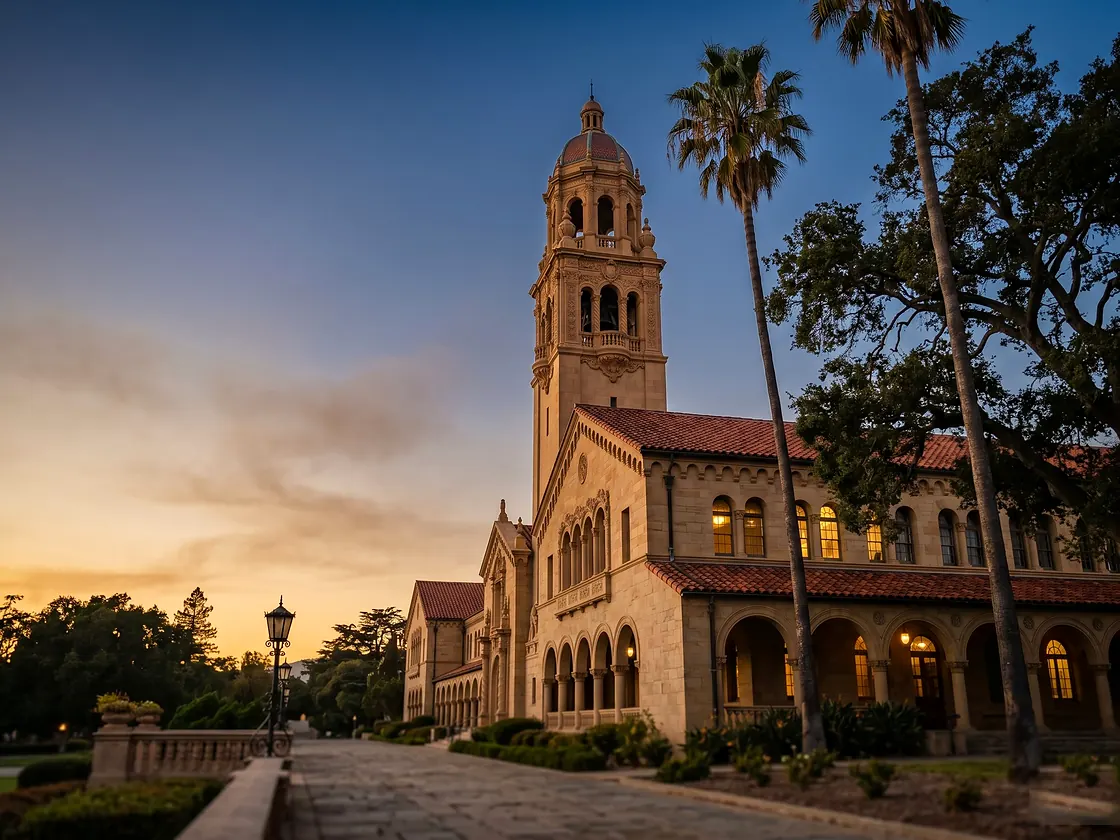
The WASC Senior College and University Commission (WSCUC) is one of six regional accrediting agencies recognized by the U.S. Department of Education. Originally part of the Western Association of Schools and Colleges, WSCUC became an independent commission in 2012–13 and today accredits more than 200 institutions, including some of the most renowned universities in the world — Stanford, Caltech, USC, and the entire University of California system.
WSCUC accredits degree-granting institutions that offer baccalaureate programs and above. Its geographic heartland includes California, Hawaii, and U.S.-affiliated Pacific Islands, but the Commission increasingly accredits institutions located anywhere in the United States and internationally. If your institution is based in the western U.S. or serves students there, WSCUC is very likely the regional accreditor you need.
Why does it matter? WSCUC accreditation enables institutions to participate in Title IV federal student aid, ensures credits transfer smoothly to other accredited institutions, and signals to students, employers, and regulators that your institution meets the highest standards of quality. The Commission's 2023 Handbook of Accreditation (revised September 2025) establishes four Standards of Accreditation amplified by over 30 Criteria for Review (CFRs), with a framework that uniquely balances accountability with innovation.
| Detail | Information |
|---|---|
| Founded | 1924 (as the Western College Association; formal charter 1962) |
| Headquarters | Alameda, California |
| President | Maria Toyoda |
| Recognition | U.S. Department of Education (USDE) & Council for Higher Education Accreditation (CHEA) |
| Scope | Regional institutional accreditor for senior colleges & universities |
| Degree Levels | Bachelor's, master's, and doctoral (institutions may also offer associate degrees) |
| Geographic Scope | California, Hawaii, Pacific Islands; plus U.S. & international institutions |
| Current Standards | 4 Standards, 30+ Criteria for Review (2023 Handbook, revised Sept. 2025) |
| Accreditation Cycle | Up to 10 years (reaffirmation); Candidacy up to 5 years (initial) |
| Title IV Eligibility | Yes — enables participation in federal financial aid programs |
How to Get Regional Accreditation: Is WSCUC the Right Fit?
WSCUC is designed for senior colleges and universities — institutions whose primary offerings are baccalaureate degrees and above. It works best for public, private nonprofit, and for-profit institutions that value data-driven decision-making, student success, and continuous improvement. Here's a quick self-assessment to see if WSCUC is your path to regional accreditation:
- You offer (or plan to offer) bachelor's, master's, or doctoral degrees
- You are located in California, Hawaii, Guam, American Samoa, or Pacific Island territories
- You are a U.S. or international institution seeking one of the most prestigious regional accreditations
- You plan to apply for Title IV federal financial aid eligibility
- You value an evidence-based, innovation-friendly accreditation framework
- You want peer benchmarking through WSCUC's Key Indicators Dashboard (KID)
- You are a faith-based, for-profit, or nonprofit institution offering degree programs
- Your institution only offers certificates, diplomas, or licenses (no degree programs)
- You are a community college offering only associate degrees (ACCJC may be your accreditor)
- You are a career or trade school better suited to national accreditation (ACCSC, COE, or DEAC)
- Your institution is in a region served by another regional accreditor (e.g., SACSCOC for the Southeast)
- You are not prepared for a multi-year, evidence-intensive accreditation process
- You are not yet operational with students actively enrolled in degree programs
WSCUC's 4 Standards of Accreditation (2023 Handbook, Revised Sept. 2025)
WSCUC's accreditation framework rests on four comprehensive Standards, each defined by detailed Criteria for Review (CFRs). Together, the Standards and 30+ CFRs create a holistic picture of institutional quality. Here's what evaluators are looking for:
Self-Study Exhibits & Evidence: What to Prepare
WSCUC institutions compile evidence into an Institutional Report organized by standard, with an appendix including the Compliance with WSCUC Standards Worksheet, Federal Compliance Forms, and institutional exhibits. As experienced accreditation self-study consultants, we organize the work into these critical categories:
| Exhibit Category | What You Need | WSCUC Standard |
|---|---|---|
| Mission & Strategic Plan | Published mission/vision/values, board approval records, strategic plan with measurable objectives | Standards 1 & 4 |
| Governance & Board Docs | Bylaws, board minutes, conflict-of-interest policies, CEO evaluation records, org charts | Standard 3 |
| Institutional Policies | Academic freedom, grievance, admissions, refund, identity verification, nondiscrimination policies | Standard 1 |
| Academic Programs & Catalog | Degree descriptions, credit-hour policies, syllabi, learning outcomes, gen-ed requirements | Standard 2 |
| Program Review Reports | Periodic reviews with student achievement analysis and evidence of improvements | Standards 2 & 4 |
| Faculty Credentials | CVs, transcripts, evaluation records, professional development plans | Standards 2 & 3 |
| Learning Outcomes & Assessment | Assessment plans, rubrics, results, evidence of using results for improvement | Standards 2 & 4 |
| Student Achievement Data | Disaggregated retention, graduation, post-grad outcomes; KID data; surveys | Standards 2 & 4 |
| Student Support Services | Advising, tutoring, career services, financial aid, disability services documentation | Standard 2 |
| Financial Statements | Unqualified audited statements, multi-year budgets, revenue plans | Standard 3 |
| Facilities & Technology | Campus docs, technology plans, library inventories, IT security policies | Standard 3 |
| WSCUC Compliance Worksheet | Completed worksheet with hyperlinked evidence for every CFR | All Standards |
| Federal Compliance Forms | Transfer credit, identity verification, Title IV, credit-hour, complaint forms | Federal Requirements |
WSCUC Accreditation Timeline: From Eligibility to Site Visit
WSCUC does not prescribe a fixed number of visits or years to achieve initial accreditation. Instead, it emphasizes demonstrating compliance with all four Standards and 39 CFRs. Here's what the timeline typically looks like:
Initial Accreditation (New Institutions)
Reaffirmation (Existing Institutions)
WSCUC Accreditation Fees
All fees below are paid directly to WSCUC. WSCUC's fee schedule is based on institutional size and educational/general expenditures, so exact amounts vary. Always consult the WSCUC Dues and Fees Schedule for current figures.
| Fee Type | Estimated Cost | Notes |
|---|---|---|
| Eligibility Application | Varies | Contact WSCUC for current application fee |
| Candidacy / Initial Accreditation | ~$15,000 | Covers first two Seeking Accreditation Visits including team travel & lodging |
| Annual Dues (Candidate/Member) | ~$5,000–$30,000+/year | Based on institutional educational & general (E&G) expenditures |
| Substantive Change Fees | Varies | New location, new program level, change of control, etc. |
| Special Visit Fees | Varies | Institution covers team travel and per diem costs |
| ARC Conference Registration | ~$400–$800 | Annual Accreditation Resource Conference; varies by year |
| Appeals Fee | Contact WSCUC | For appealing an adverse accreditation decision |
How Our WSCUC Accreditation Consultants Help
Expert Education Consultants is a licensing and accreditation consulting firm. Our team has guided 115+ institutions through state authorization and accreditation — including 18 first-time accreditations closed with zero critical findings. Here's how we partner with you on WSCUC specifically:
Frequently Asked Questions
What does an accreditation consultant do?
An accreditation consultant guides your institution through every phase of an accrediting agency's review — from initial gap analysis and self-study design, through evidence compilation, institutional report drafting, mock peer-review sessions, and Commission response. For WSCUC specifically, a consultant translates the four Standards and 30+ Criteria for Review into a project plan your team can actually execute, and helps you avoid the documentation gaps that trigger Notices of Concern.
How long does WSCUC accreditation take?
For initial accreditation, expect 3–7 years from Notification of Intent through Commission decision, depending on your institutional readiness. Reaffirmation reviews typically span about two years. Working with an experienced accreditation consultant can help compress the timeline by avoiding common mistakes and delays.
How do I prepare for a WSCUC accreditation site visit?
Preparation starts 6–12 months before the visit. Build a complete evidence room (digital and physical), conduct mock interviews with faculty and staff, rehearse responses to the most common peer-reviewer questions, finalize the WSCUC Compliance Worksheet with hyperlinked evidence for every CFR, and run an end-to-end logistics walkthrough. Our team facilitates mock site visits so your team isn't seeing the questions for the first time on visit day.
What degree levels does WSCUC accredit?
WSCUC accredits institutions offering baccalaureate degrees and above. Institutions may also offer associate degrees if their primary mission is at the baccalaureate level or higher. Certificate-only or diploma-only institutions are not eligible.
Is WSCUC recognized by the U.S. Department of Education?
Yes. WSCUC is recognized by both the U.S. Department of Education and the Council for Higher Education Accreditation (CHEA). This recognition means that WSCUC-accredited institutions are eligible for Title IV federal financial aid programs.
What's the difference between WSCUC and WASC?
WSCUC is the current name for what was formerly called the WASC Senior College and University Commission. The Western Association of Schools and Colleges (WASC) was the umbrella organization, which split into three independent commissions in 2012–13. WSCUC accredits senior colleges and universities; ACCJC accredits community colleges; and ACS WASC accredits K–12 schools.
Can institutions outside California seek WSCUC accreditation?
Yes. While WSCUC's traditional region includes California, Hawaii, and the Pacific Islands, the Commission increasingly accredits institutions located anywhere in the U.S. and internationally. Contact WSCUC or our team to discuss whether WSCUC is the right fit for your location.
What is the WSCUC Key Indicators Dashboard (KID)?
KID is WSCUC's public-facing data dashboard that presents trend and comparative information on accredited institutions using federal datasets. It covers metrics like student completion, finances, and post-graduation outcomes. Institutions are expected to reference KID data in their self-study for peer benchmarking.
How much does WSCUC accreditation cost?
WSCUC's candidacy/initial accreditation fee is approximately $15,000 (covering the first two site visits), with annual dues ranging from roughly $5,000 to $30,000+ based on your educational and general expenditures. Consulting fees from Expert Education Consultants are separate and customized to your institution's needs.
What happens if my institution doesn't meet all the standards?
If the Commission finds areas of non-compliance, it may grant Candidacy (pre-accreditation status) for up to five years while you work toward full compliance. Subsequent visits focus only on areas needing improvement. The Commission may also issue a Notice of Concern or require interim reports.
Begin your WSCUC accreditation
journey with Expert Education Consultants.
115+ institutions launched. 18 first-time accreditations guided to zero critical findings. We partner with senior colleges and universities from Eligibility through Commission decision and ongoing compliance.