

If you’ve been reading this series, you already know that FERPA (the Family Educational Rights and Privacy Act) is the headline compliance issue whenever AI tools enter a classroom. We covered FERPA’s implications for AI governance in depth in Post 2, and if you haven’t read it, go back—it’s foundational. But here’s the uncomfortable truth that a lot of founders and administrators don’t hear until they’re mid-launch and suddenly sweating: FERPA is only one statute in a much larger regulatory web.
When your institution deploys AI-driven learning platforms, adaptive tutoring systems, content filters, and student-facing chatbots, you’re simultaneously triggering compliance obligations under CIPA (the Children’s Internet Protection Act), IDEA (the Individuals with Disabilities Education Act), Section 504 of the Rehabilitation Act, and a rapidly growing patchwork of state-level student privacy statutes that often go further than anything the federal government requires. Miss one of these, and it doesn’t matter how polished your AI strategy is—you’re exposed.
I’ve advised institutions that had airtight FERPA vendor agreements but had never once considered whether their AI-powered content filtering satisfied CIPA requirements. I’ve seen schools roll out adaptive learning platforms without verifying that those platforms were accessible to students with disabilities—a Section 504 problem that became an Office for Civil Rights complaint. And I’ve watched a founder in Illinois discover, three months before his planned launch, that his state’s Student Online Personal Protection Act imposed data handling obligations that his primary AI vendor couldn’t meet.
These aren’t edge cases. They’re the standard operating environment for anyone opening or running a postsecondary institution in 2026. And the compliance cost of getting it wrong—in dollars, in accreditation risk, in enrollment damage—is significantly higher than the cost of building comprehensive compliance into your planning from the start.
So let’s map the full landscape. This post will walk you through every major federal compliance framework that touches AI in education, show you where they intersect (and where they conflict), layer in the state-level laws you can’t afford to ignore, and give you a practical governance model for managing all of it without losing your mind.
CIPA and AI-Generated Content: The Filtering Problem Nobody Planned For
Let’s start with the statute that catches most founders off guard. The Children’s Internet Protection Act (CIPA) was signed into law in 2000, long before anyone was thinking about generative AI in classrooms. Its original purpose was straightforward: require schools and libraries that receive federal E-rate funding or Library Services and Technology Act grants to implement internet safety policies and technology protection measures—essentially, content filters—that block access to visual content that is obscene, contains child sexual abuse material, or is harmful to minors.
For twenty years, CIPA compliance was mostly a matter of installing web-filtering software (think Lightspeed, GoGuardian, Securly) and maintaining an acceptable-use policy. IT departments handled it. Compliance offices checked a box. Done.
Generative AI broke that model.
Here’s the problem: traditional CIPA-compliant filters work by blocking access to known URLs and categorized websites. They’re designed for a web-browsing paradigm. But when a student interacts with a generative AI tool—ChatGPT, Claude, Gemini, an embedded AI tutor within your LMS—the content isn’t sitting on a website waiting to be categorized. It’s generated in real time, in response to the student’s prompt. A student can access a perfectly legitimate AI platform and receive content that would violate CIPA standards, all without visiting a blocked URL.
Traditional web filters can’t inspect AI-generated responses. They can block the AI platform entirely (which defeats the purpose of using AI in instruction) or allow it entirely (which creates a CIPA gap). Neither option works.
What CIPA Actually Requires in 2026
The Federal Communications Commission (FCC), which administers the E-rate program and enforces CIPA, hasn’t issued formal guidance specifically addressing generative AI as of early 2026. But the statute’s language is broad enough to cover AI-generated content. CIPA requires a “technology protection measure” that blocks or filters “access to visual depictions” that are obscene, constitute child sexual abuse material, or (for minors) are harmful. The law doesn’t specify that these depictions must come from a website—they can come from any internet-connected service, which includes AI platforms.
Additionally, CIPA requires institutions to adopt and enforce an internet safety policy that addresses monitoring online activities of minors, educating minors about appropriate online behavior, and specific concerns including unauthorized disclosure of personal information. Every one of those requirements is directly relevant to AI-powered learning tools.
So what does compliant AI filtering actually look like? Here’s what we’re recommending to clients right now:
Here’s the part most people get wrong: CIPA compliance isn’t just about the technology. It also requires the internet safety policy and the educational component. Your institution needs to teach students about responsible use of AI tools as part of your CIPA compliance, not just block content. That means integrating digital citizenship and AI safety into your curriculum—which, if you’ve been following this series, you should already be doing for other reasons.
Who Needs to Worry About CIPA?
CIPA applies to schools and libraries that receive E-rate discounts or LSTA grants. If your institution doesn’t receive these specific federal funds, CIPA doesn’t technically apply to you. But here’s the catch: many postsecondary institutions receive E-rate funding for internet and telecommunications services, and the program is being used increasingly by career colleges, community colleges, and vocational schools. If you’re considering E-rate applications—and you probably should be, because the discounts are substantial—CIPA compliance becomes mandatory.
Even if you don’t receive E-rate funding, CIPA’s framework represents a best-practice standard for internet safety in educational settings. State authorizers and accreditors may look favorably on institutions that voluntarily adopt CIPA-aligned safety policies, particularly if your school serves students under 18 (K–12 programs, dual enrollment, or early college models).
One client of ours—a career college in Georgia that served some dual-enrollment high school students—initially dismissed CIPA as “a K–12 thing.” When they applied for E-rate funding for their campus network, they suddenly needed a compliant internet safety policy. Because they’d already integrated AI tools into their instructional platform, they had to retrofit content filtering across their entire AI ecosystem in under eight weeks. Total unbudgeted cost: about $18,000 in consulting, technical configuration, and policy drafting. Had they planned for it from the start, it would have been folded into their initial technology setup for a fraction of that.
IDEA, Section 504, and Adaptive AI: When Personalization Creates Legal Obligations
Now let’s talk about disability law, because this is where AI in education gets both incredibly promising and legally complex.
The Individuals with Disabilities Education Act (IDEA) is the federal law that guarantees a free appropriate public education (FAPE) to children with disabilities from birth through age 21. It requires schools to develop an Individualized Education Program (IEP) for each eligible student—a legally binding document that specifies the special education services, accommodations, and supports that student will receive. IDEA applies primarily to K–12 public schools and programs that receive IDEA funding.
Section 504 of the Rehabilitation Act of 1973 is broader. It prohibits discrimination based on disability by any institution that receives federal financial assistance—which includes virtually every postsecondary institution that participates in Title IV financial aid programs. Section 504 requires institutions to provide reasonable accommodations to ensure students with disabilities have equal access to educational programs and activities.
Why does this matter for your AI strategy? Because adaptive AI learning platforms are, by their very nature, designed to personalize instruction based on individual student characteristics. That’s a powerful capability—but it creates legal obligations the moment a student with a disability uses the platform.
The Accessibility Requirements You Can’t Ignore
Under Section 504 and the ADA (Americans with Disabilities Act), your institution must ensure that AI-powered learning tools are accessible to students with disabilities. This means:
Screen reader compatibility. AI interfaces must work with assistive technologies like JAWS, NVDA, and VoiceOver. Many AI chatbot interfaces—including some widely used in education—fail basic screen reader tests. If your AI tutoring platform requires mouse clicks to navigate or displays content in ways screen readers can’t parse, you have a 504 violation.
Alternative formats for AI-generated content. If an AI tool generates visual content (charts, diagrams, images), those outputs need alternative text descriptions. If it generates audio, captions or transcripts must be available. This isn’t just good practice—it’s legally required.
Cognitive accessibility. This one is subtler but increasingly important. Adaptive AI platforms that adjust content difficulty based on student performance need to account for students with learning disabilities. An AI that “dumbs down” content for a student with dyslexia (who may struggle with reading speed but not comprehension) is providing an inappropriate accommodation. The platform’s adaptation logic needs to be nuanced enough to support, not shortchange, students with diverse learning profiles.
Input accessibility. If your AI tool requires typed prompts, students with motor impairments need alternative input methods—voice-to-text, switch access, eye tracking. This isn’t a future concern; it’s a current requirement.
IDEA-Specific Considerations for AI Tools
If your institution serves students with IEPs (most relevant for K–12 schools, dual-enrollment programs, and transition programs), AI tools introduce specific IDEA compliance questions:
Can the AI platform be configured to implement the specific accommodations in a student’s IEP? For example, if an IEP specifies extended time on assessments, can your AI-based assessment tool enforce that accommodation? If an IEP requires text-to-speech support, does your AI platform provide it natively, or do you need supplementary tools?
Does the AI platform’s adaptive behavior constitute a change in educational placement? Under IDEA, a student’s educational placement can’t be changed without a formal IEP team meeting. If an adaptive AI platform fundamentally alters the instruction a student receives—say, by moving a student with a disability into a significantly different content track than their peers—that could be construed as a placement change. This is a gray area that hasn’t been fully litigated, but it’s one that savvy compliance officers are flagging.
Is the AI tool being used to make eligibility or classification decisions? If your institution uses AI to screen students for learning disabilities or to recommend special education services, you’re in very sensitive territory. IDEA requires that evaluations be conducted by qualified professionals using validated instruments. An AI-generated assessment that influences disability classification decisions could violate IDEA’s evaluation protections.
The bottom line: adaptive AI in education is subject to the same disability accommodation requirements as every other instructional tool. The fact that it’s “smarter” or “more personalized” doesn’t exempt it from 504, ADA, or IDEA. If anything, the adaptive nature of these tools raises the compliance bar—because a tool that personalizes instruction must personalize it equitably for students with disabilities.
A Practical Accessibility Audit for AI Tools
Before deploying any AI tool, we run clients through this accessibility audit. It’s not exhaustive—full WCAG (Web Content Accessibility Guidelines) compliance testing requires specialized expertise—but it catches the most common problems.
One thing I want to emphasize: don’t rely on the vendor’s self-reported accessibility status. We’ve seen multiple AI ed-tech vendors claim WCAG 2.1 compliance in their marketing materials, only to fail basic screen reader tests when we actually evaluated the product. Ask for a VPAT (Voluntary Product Accessibility Template)—a standardized document where the vendor self-reports conformance with accessibility standards—and then verify independently. A VPAT is a starting point, not a guarantee.
Where the Frameworks Collide: Managing Overlapping Compliance Obligations
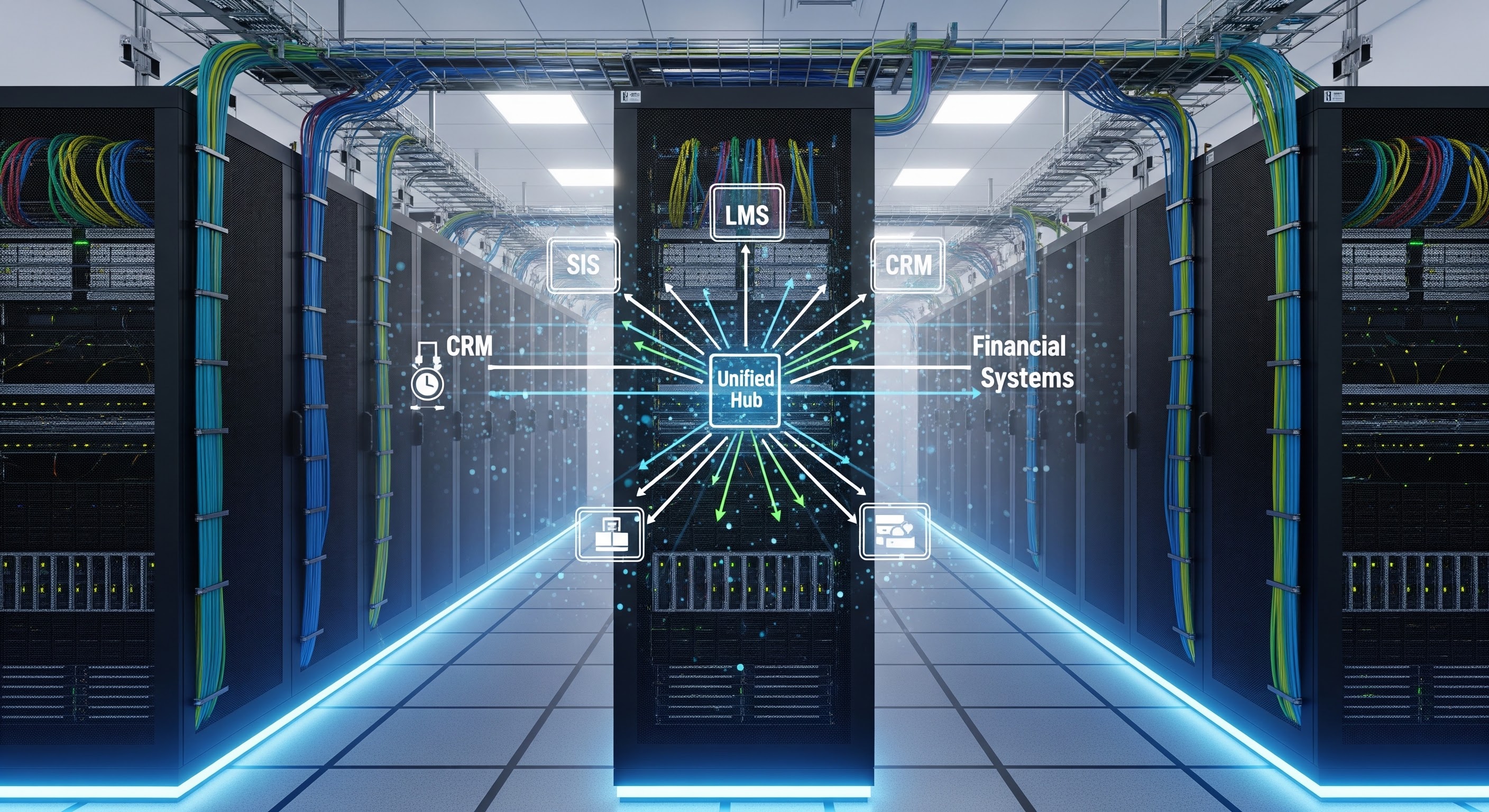
Here’s the part that makes compliance officers reach for the coffee: these federal statutes don’t operate in isolation. When you deploy an AI tool in an educational setting, you’re potentially triggering obligations under FERPA, CIPA, Section 504/ADA, IDEA, and—depending on your institution—Title IV program integrity rules, all simultaneously. And they don’t always play nicely together.
Consider this scenario, which I’ve seen play out more than once: your institution deploys an AI-powered adaptive learning platform that collects detailed data on student learning behaviors (FERPA implication), generates content in real time that must be filtered for harmful material (CIPA implication), adapts instruction based on individual performance (Section 504/IDEA implication), and is required for a course that students use federal financial aid to pay for (Title IV implication). That’s four separate compliance frameworks activated by a single technology deployment.
The intersections create specific tension points:
FERPA vs. CIPA monitoring. CIPA may require you to monitor student online activity for safety purposes. FERPA restricts what student data you can collect and share. If your CIPA monitoring captures student AI prompts that reveal personal information—health conditions, family situations, emotional states—you’ve created education records that FERPA protects. You need a policy that addresses how monitored data is handled, who can access it, and how long it’s retained.
Section 504 accommodations vs. data minimization. Providing accommodations for students with disabilities often requires the AI tool to have access to disability documentation—IEP details, accommodation letters, diagnostic information. FERPA requires data minimization. You need to share only the information necessary for the accommodation, not the student’s full disability file. This means working with your AI vendor to create accommodation profiles that trigger the right platform behaviors without exposing protected health or disability information.
IDEA parental consent vs. FERPA’s school official exception. Under FERPA’s school official exception, institutions can share student education records with vendors acting as school officials without parental consent, provided the vendor meets certain criteria. But IDEA has its own consent requirements for sharing disability-related records. If your AI vendor will process data about students with IEPs, you may need explicit parental consent under IDEA even if FERPA’s school official exception would otherwise apply. Consult your education law attorney on this one—the interaction is genuinely complex.
A Unified Compliance Map
To help clients navigate this, we’ve developed a compliance mapping framework that identifies, for each AI tool deployment, which statutes are triggered and what each requires. Here’s a simplified version:
The State-Level Privacy Patchwork: What Federal Law Doesn’t Cover
If the federal compliance landscape feels complex, wait until you layer in state law. Over the past decade, states have enacted a wave of student privacy legislation that, in many cases, goes significantly further than FERPA. And unlike FERPA—which hasn’t been substantially updated since 2008—state laws are being actively revised to address AI.
As of early 2026, at least 45 states and the District of Columbia have enacted student data privacy laws that supplement federal protections. A handful of these are particularly relevant if you’re planning an AI-integrated institution.
Key State Laws to Know
California: SOPIPA and the CCPA/CPRA. The Student Online Personal Information Protection Act (SOPIPA), enacted in 2014, prohibits operators of websites, online services, and apps used for K–12 school purposes from using student data for non-educational purposes, including targeted advertising and profile building. While SOPIPA is focused on K–12, California’s broader Consumer Privacy Rights Act (CPRA) applies to all California residents—including postsecondary students—and gives individuals the right to know what data is collected, to request deletion, and to opt out of data sales. If you’re operating in California or enrolling California residents (including through online programs), you need to comply with both.
Illinois: SOPPA. Illinois’s Student Online Personal Protection Act (SOPPA), updated significantly in 2021, requires schools and school districts to maintain a public inventory of all software applications that collect student data, sign data privacy agreements (DPAs) with every vendor that processes student information, and conduct breach notification within strict timelines. While SOPPA is K–12 focused, Illinois postsecondary institutions serving dual-enrollment students or operating feeder programs need to understand these requirements. The DPA requirement is also becoming a model that other states are adapting for higher education.
New York: Education Law Section 2-d. New York’s student data privacy law requires school boards and educational agencies to adopt data security and privacy standards, mandates DPAs with all third-party contractors that access student data, and imposes substantial penalties for unauthorized data releases. The state’s chief privacy officer has signaled that AI tools used in instruction fall squarely within the law’s scope.
Colorado: CPA and Student Data Transparency Act. Colorado’s Consumer Privacy Act (CPA), which took effect in 2023, gives consumers rights over their personal data that extend to students. The state’s Student Data Transparency and Security Act requires school districts and charter schools to maintain a list of all applications that have access to student data. Colorado’s Office of the Attorney General has been active in investigating data privacy violations—AI-related or otherwise.
Texas: HB 4 and SCOPE Act. Texas enacted HB 4 (the Securing Children Online through Parental Empowerment Act) in 2023, which includes provisions affecting how online platforms—potentially including AI learning platforms—interact with minors. The state has also been active in data privacy enforcement generally, and institutions operating in Texas should anticipate increasing scrutiny of AI tool data practices.
The core lesson: don’t assume federal compliance equals state compliance. Every state where you operate—or enroll students from—may impose additional obligations on how AI tools handle student data. If you’re building an online institution that serves students across multiple states, the compliance burden multiplies. This is one of those areas where investing in a state-by-state compliance audit before launch pays for itself many times over.
How State Laws Are Targeting AI Specifically
What’s changed in the last 18 months is that states are no longer just regulating student data in general terms—they’re increasingly targeting AI by name. Several states introduced or passed legislation in 2025 that specifically addresses AI in educational settings:
California’s AB 1008 (introduced 2025) would require educational institutions to disclose when AI is used in student-facing services and to conduct impact assessments before deploying AI tools that affect student outcomes. Oregon’s HB 2027 requires school districts to develop AI-specific governance policies and includes provisions for student and parent notification when AI tools are used in instruction. Connecticut’s SB 1103 establishes an AI in Education Task Force to study the use of AI in public schools and recommend regulatory frameworks. Virginia’s HB 585 adds AI literacy and governance requirements for public school systems and encourages higher education institutions to develop parallel frameworks.
Even in states that haven’t yet passed AI-specific education legislation, attorneys general are increasingly willing to use existing consumer protection and data privacy authorities to investigate AI-related complaints in educational settings. Don’t wait for a statute with “AI” in the title to take state compliance seriously.
Building Institutional Governance for Comprehensive AI Compliance
Managing all of this requires more than a checklist. It requires a governance structure—people, processes, and documentation—that ensures compliance obligations are identified, assigned, monitored, and updated as laws and technologies evolve.
Here’s the governance model we’ve refined through work with multiple institutions over the past two years. It’s designed for institutions of any size, from a 200-student career college to a multi-campus university.
The AI Compliance Committee
Your institution needs a standing committee—not a one-time task force—dedicated to AI compliance. This committee should include at minimum: a compliance officer or designee (chair), an IT/information security representative, a faculty representative, a student services representative, legal counsel (internal or external), and a registrar or enrollment management representative.
The committee meets quarterly at minimum, with emergency sessions as needed when new regulations are enacted or AI incidents occur. Its core responsibilities include maintaining the institution’s AI tool inventory and compliance map, reviewing all new AI tool deployments for multi-statute compliance (FERPA, CIPA, 504/ADA, IDEA, state laws), managing vendor data processing agreements and accessibility audits, overseeing incident response for AI-related compliance breaches, and conducting an annual comprehensive compliance review.
The Compliance Documentation Framework
Accreditors and state authorizers want documentation. Here’s what your file should contain:
I can’t overstate how important this documentation is. In every accreditation site visit I’ve supported in the past year, evaluators have asked about AI governance and compliance documentation. In every state authorization review where AI was discussed, the authorizer wanted to see written policies and evidence of implementation. If you don’t have it written down, it didn’t happen.
Title IV Implications: How AI Compliance Connects to Federal Financial Aid
For most postsecondary institutions, Title IV eligibility—the ability to offer federal Pell Grants, Direct Loans, and other federal student aid—is the financial backbone of the business model. And Title IV eligibility is directly tied to compliance. If your institution loses its accreditation or state authorization due to AI compliance failures, your Title IV eligibility goes with it.
But the connection goes deeper than that. The U.S. Department of Education’s Office of Federal Student Aid (FSA) has its own program integrity requirements that interact with AI deployments. If your institution uses AI tools in ways that affect student eligibility determinations, satisfactory academic progress (SAP) calculations, or verification processes, you’re touching Title IV program integrity rules directly.
Consider an AI-powered advising system that flags students as unlikely to complete a program and recommends disenrollment. If that recommendation leads to a withdrawal that triggers Return of Title IV Funds calculations, the AI’s accuracy and fairness become Title IV compliance issues. Or consider an AI grading system whose results determine whether a student maintains satisfactory academic progress. If the AI’s grading algorithm has systematic biases, students could lose their financial aid eligibility based on flawed assessments.
The Department of Education’s July 2025 Dear Colleague Letter on AI in education signaled that the Department is watching how institutions use AI and expects responsible practices. While the letter was framed as guidance rather than regulation, it’s a clear indicator of where enforcement attention is heading.
Practical Timeline: Building Multi-Framework AI Compliance from Scratch
For founders and institutional leaders who need to build comprehensive AI compliance from the ground up, here’s a realistic phased approach. This timeline assumes you’re in the early planning or pre-launch stage.
A note on cost: comprehensive multi-framework compliance development typically runs $15,000 to $35,000 for a small to mid-sized institution, depending on the number of AI tools in use, the number of states involved, and whether you need external legal counsel for state-specific analysis. That’s a significant investment, but it’s a fraction of the cost of a single compliance violation that triggers an OCR investigation, a state enforcement action, or an accreditation sanction.
Key Takeaways
1. FERPA is not the only federal compliance framework that applies to AI in education. CIPA, IDEA, Section 504/ADA, and Title IV program integrity rules all create obligations your institution must manage.
2. CIPA compliance for AI means addressing AI-generated content, not just traditional web filtering. Institutions receiving E-rate funding must implement technology protection measures that cover real-time AI outputs.
3. Section 504 and ADA require that every AI tool used in instruction be accessible to students with disabilities. Vendor claims of accessibility should be independently verified.
4. IDEA creates specific obligations for AI tools used by students with IEPs. Adaptive AI must be configurable to implement individual accommodations without constituting an unauthorized placement change.
5. State privacy laws often go further than federal law and are increasingly targeting AI specifically. You must comply with every state where you operate or enroll students.
6. Federal compliance frameworks frequently overlap and occasionally conflict. A unified compliance map for each AI tool is essential.
7. Build a standing AI compliance committee with quarterly reviews, not a one-time task force.
8. Documentation is everything. If you can’t show it to an accreditor or state authorizer, it doesn’t count.
9. Multi-framework compliance costs $15,000–$35,000 to build proactively. A single violation can cost many times that in enforcement, remediation, and reputational damage.
10. Start during your planning phase, not after launch. Retrofitting comprehensive compliance is always more expensive and more painful.
Glossary of Key Terms
Frequently Asked Questions
Q: Does CIPA apply to postsecondary institutions?
A: CIPA applies to any school or library that receives E-rate discounts or LSTA grants, regardless of level. Many community colleges, career colleges, and vocational schools receive E-rate funding for internet and telecommunications services. If your institution applies for or receives E-rate support, CIPA compliance is mandatory. Even if you don’t receive E-rate funding, voluntarily adopting CIPA-aligned internet safety policies is a strong compliance practice—especially if you serve students under 18 through dual-enrollment or early college programs.
Q: How do I know which state privacy laws apply to my institution?
A: You need to comply with the student privacy laws of every state where your institution physically operates and, for online programs, potentially every state where enrolled students reside. This is the same “state authorization” analysis you’re already doing for licensure purposes. Work with an education law attorney to map your enrollment footprint to state-level privacy obligations. The Student Privacy Compass (maintained by the Future of Privacy Forum) and the Education Commission of the States are useful starting resources.
Q: Our AI vendor says they’re FERPA-compliant. Does that mean we’re covered?
A: No. FERPA compliance is the institution’s obligation, not the vendor’s. Even if a vendor says they’re “FERPA compliant,” you need to verify that through a signed data processing agreement that specifies how student data is handled, stored, retained, and deleted. You also need to confirm the vendor isn’t using student data for model training or other non-educational purposes. And FERPA compliance alone doesn’t address CIPA, Section 504, IDEA, or state law requirements. Always audit against all applicable frameworks.
Q: What happens if an AI tool we’re using isn’t accessible under Section 504?
A: If a student with a disability is unable to access an AI tool that’s required for a course, you’re in violation of Section 504 and potentially the ADA. The student can file a complaint with the Office for Civil Rights (OCR), which can investigate and require remediation. In practice, institutions typically need to either fix the accessibility issue quickly, provide an equally effective alternative for the affected student, or stop requiring the tool until it’s accessible. OCR investigations are time-consuming and reputationally damaging—prevention is far less costly.
Q: Can adaptive AI tools make IEP-related decisions?
A: AI tools should not be making IEP decisions. Under IDEA, all decisions about a student’s IEP—including services, accommodations, and placement—must be made by the IEP team, which includes the parent, teachers, and other qualified professionals. An AI tool can inform those decisions by providing data (e.g., learning analytics, performance trends), but the decision itself must be human-made. If an adaptive AI platform is functionally altering a student’s educational experience in ways that diverge from their IEP, that’s a compliance risk that should be addressed immediately.
Q: We’re a fully online school. Does CIPA still apply to us?
A: If you receive E-rate funding, yes. E-rate covers internet access and internal network connections, which online schools use. The trickier question is how CIPA’s “technology protection measure” requirement applies when students are accessing AI tools from their own devices and networks, not through an institutional network. There’s no definitive FCC guidance on this specific scenario as of 2026. Our recommendation: adopt CIPA-aligned safety policies regardless, and configure AI tools with built-in content safety filters that travel with the student, not the network.
Q: How do Section 504 and IDEA differ in their application to AI tools?
A: Section 504 is a civil rights statute that applies to all institutions receiving federal financial assistance, including postsecondary institutions. It requires equal access and reasonable accommodations. IDEA is a funding statute that provides specific rights and services for K–12 students with identified disabilities, including the right to an IEP. For postsecondary institutions, Section 504 is the primary framework. IDEA becomes relevant if your institution serves K–12 students directly (e.g., lab schools, dual enrollment, transition programs) or if you’re a K–12 school. Both require AI tools to be accessible, but IDEA adds the additional layer of IEP implementation.
Q: What should our AI vendor data processing agreement include?
A: At minimum: a clear description of what student data the vendor will access and process; prohibition on using student data for model training, advertising, or non-educational purposes; data encryption and security standards (SOC 2 or equivalent); data retention and deletion terms; breach notification procedures and timelines; FERPA school official designation (if applicable); Section 504/ADA accessibility commitments; compliance with applicable state student privacy laws; right to audit; and indemnification for vendor-caused breaches. Have your education law attorney review every DPA before signing.
Q: How much does multi-framework AI compliance cost for a new institution?
A: For a small to mid-sized institution (under 1,000 students, 3–10 programs), budget $15,000 to $35,000 for the initial compliance buildout, which includes legal consultation, policy drafting, vendor audits, accessibility testing, and staff training. Annual maintenance runs $5,000 to $15,000 depending on the number of AI tools and states involved. These figures increase for larger or multi-state institutions. The most expensive path is not budgeting for compliance and responding to an enforcement action after the fact—which can easily exceed $100,000 when you factor in legal defense, remediation, reputation repair, and potential enrollment loss.
Q: Do accreditors check for CIPA and 504 compliance, or just FERPA?
A: Accreditors evaluate institutional compliance holistically. While they may not audit CIPA compliance line by line, they assess whether the institution has adequate policies for student safety, data privacy, and equal access. Section 504 and ADA compliance are central to accreditation standards related to student services and equal opportunity. If an accreditation team discovers that your AI tools aren’t accessible to students with disabilities, that’s a finding that can affect your accreditation status. Having a comprehensive compliance framework—not just FERPA—strengthens your accreditation case significantly.
Q: What about HIPAA? Does it apply to AI tools in education?
A: HIPAA (the Health Insurance Portability and Accountability Act) applies to covered entities and their business associates—primarily health care providers, health plans, and health care clearinghouses. Most educational institutions are not HIPAA-covered entities. However, if your institution operates a student health center, a clinical training program that provides actual patient care, or an employee health plan, HIPAA may apply to those specific operations. When AI tools are used in clinical training settings, the intersection of FERPA (student records), HIPAA (patient records), and Section 504 (accessibility) requires especially careful compliance planning.
Q: Can we use a single policy to cover all AI compliance obligations?
A: You can—and should—have a unified AI governance policy, but it needs to explicitly address each applicable framework. A single policy that says “we comply with all applicable laws” isn’t sufficient. Your policy should include specific sections or appendices for FERPA data handling, CIPA content safety, Section 504/ADA accessibility, IDEA accommodations (if applicable), and each relevant state privacy law. Think of it as an umbrella policy with framework-specific provisions underneath. This approach avoids duplication while ensuring nothing falls through the cracks.
Q: We’re a trade school with no students under 18. Do we still need to worry about CIPA and IDEA?
A: If you don’t receive E-rate funding and don’t serve students under 18, CIPA and IDEA likely don’t apply to you directly. But Section 504 almost certainly does (if you participate in Title IV), and your state privacy laws apply regardless. Don’t use the inapplicability of CIPA and IDEA as an excuse to skip compliance planning entirely. Build your framework around what does apply—FERPA, Section 504, state privacy laws—and you’ll be well-positioned to add CIPA and IDEA components later if your student population or funding sources change.
Q: How do we stay current with changing state AI privacy laws?
A: Subscribe to legislative tracking services that cover education law—the Education Commission of the States, the National Conference of State Legislatures, and the Future of Privacy Forum all maintain useful trackers. Build a regulatory monitoring function into your AI compliance committee’s quarterly review. And maintain a relationship with an education law attorney who specializes in student privacy—this is one of those areas where DIY monitoring isn’t enough, because the consequences of missing a new law can be severe.
Q: What’s the single biggest compliance mistake institutions make with AI?
A: Treating compliance as a single-framework exercise. I’ve seen institutions that are meticulously FERPA-compliant but have never conducted a Section 504 accessibility audit on their AI tools. I’ve seen schools with beautiful AI governance policies that don’t mention their state’s student privacy law. The biggest mistake is solving for one framework and assuming the rest will take care of themselves. They won’t. The institutions that get this right are the ones that map every AI tool against every applicable statute and manage compliance as an integrated system, not a series of isolated checkboxes.
Current as of February 18, 2026. Regulatory guidance, accreditation standards, and technology platforms evolve rapidly. Consult current sources and expert advisors before making institutional decisions.
If you’re ready to explore how EEC can de-risk your AI-integrated launch, reach out at sandra@experteduconsult.com or +1 (925) 208-9037.