

QUICK ANSWER
An accreditation site visit lasts 2–3 days and involves 4–7 peer reviewers who validate, in person, that your self-study reflects how your institution actually operates. Reviewers interview faculty, staff, students, and board members; examine evidence files; and observe day-to-day operations. Preparation should begin 6–12 months before the scheduled visit to organize evidence, run a mock visit, and prepare your people for interviews.
The site visit is the moment your accreditation work becomes a live performance. You have written the self-study. You have built the evidence files. Now a small team of peer reviewers from other institutions arrives on your campus to verify that the institution described in your documents is the institution they are walking through. Most deficiencies do not come from gaps in the self-study. They come from staff who cannot speak to the standards, evidence that cannot be found in the moment a reviewer asks for it, and small inconsistencies between what is written and what is practiced.
This is where preparing for accreditation stops being a documentation project and becomes a people project. Expert Education Consultants has guided 115+ institutions through this exact stretch of the journey, including 18 first-time accreditations completed with zero critical findings. The work below is how that record is built. We will walk through what happens during a site visit, the 12-month preparation timeline, how to organize your evidence file and evidence map, how to run a useful mock visit, how to prepare faculty, staff, and students for interviews, the day-of logistics that protect your team's focus, and the findings that show up most often, so you can address them before a reviewer can write them down.
What Happens During a Site Visit
A site visit is a structured, scheduled validation of your self-study by a team of peer reviewers selected by your accreditor. The visit typically lasts 2–3 days, though the exact length varies by accreditor and by visit type.
The Higher Learning Commission's comprehensive evaluation visits typically last 1.5 days on campus, with the team holding an additional day of deliberation afterward; HLC teams generally include 5–7 peer reviewers, scaled to institutional size and complexity. ACCSC schedules its on-site evaluations 2–3 months after you submit the Self-Evaluation Report, and the visit is normally a two-day evaluation by a team that includes a Commission Representative and one or more Occupation/Education Specialists. ABHES visits are usually two days, conducted by a team leader, program specialist(s), and an ABHES staff member, with a distance-education specialist added when applicable. SACSCOC uses a two-committee structure for reaffirmation: an Off-Site Reaffirmation Committee of normally 8–10 peer evaluators reviews the Compliance Certification remotely, and an On-Site Reaffirmation Committee then visits the campus to validate it. MSCHE evaluation teams of approximately seven peer evaluators conduct a multi-day visit and close with an open oral exit report on the final day. DEAC on-site evaluations are designed for evaluators to meet with key staff, faculty, principal managers, outside accountants, governing board members, and advisory council members to verify that what was reported in the Self-Evaluation Report holds up under direct examination.
Regardless of accreditor, the structure is the same. The team meets with your leadership, conducts interviews with stakeholders by role, reviews evidence in a designated room on your campus, observes operations as they happen, and ends with an exit briefing. According to the Council for Higher Education Accreditation, the team is composed largely of peers with prior accreditation experience and knowledge of your institution type — they are not strangers to your context; they have been in your chair.
The 12-Month Preparation Timeline
Preparation begins 12 months before the visit. Twelve months is not aspirational. It is what allows you to become an accredited university without the last 30 days becoming a crisis.
Here is the working timeline for institutions with 5–20 staff:
- Months 12–10: Finalize the self-study and lock the evidence list. Every standard or criterion now has a written narrative and a named owner. You stop adding new initiatives — the institution under review is the one that exists today.
- Months 10–8: Build the evidence file. Every claim in the self-study is mapped to a specific document, page number, and location. Gaps surfaced here are still fixable.
- Months 8–6: Verify faculty credentials and assemble role-based briefing packets. Each faculty member, dean, registrar, and board member receives the standards they are responsible for speaking to.
- Months 6–4: Run the mock site visit. External reviewers conduct a full agenda: interviews, document requests, exit briefing. Treat it as the real thing.
- Months 4–2: Close the gaps the mock identified. Update documents, run additional staff training, refine the interview answers that wobbled.
- Months 2–1: Confirm logistics. Reviewer travel, team room setup, meal coordination, parking, day-of agenda printed and distributed.
- Final 30 days: Run briefings, dry runs, and final document review. Everyone who will be interviewed has practiced answering the questions they are most likely to receive.
Documents get you to the site visit. Prepared people get you through it. The timeline above is built around that order of operations — the last six months are deliberately weighted toward people, not paper.
Document Organization and Evidence Mapping
Document organization is the bridge between the self-study and the site visit. Without it, your reviewers spend visit time searching instead of evaluating, and your team loses credibility for every minute the search takes.
Each accreditor uses slightly different terminology, but the underlying structure is the same: every standard or criterion is paired with the specific evidence that demonstrates compliance. HLC uses an Evidence File submitted with the Assurance Argument through its Canopy system. SACSCOC uses a Compliance Certification that documents how the institution meets each Principle. MSCHE expects an Evidence Inventory keyed to its Seven Standards. ACCSC institutions prepare a Team Room with a defined list of exhibits available for review, with additional materials available upon request. ABHES asks that the institution maintain documentation aligned with the Accreditation Manual's standards, organized for direct on-site verification.
A working evidence map answers four questions for each standard: What is the standard? Which document proves we meet it? Where is that document located (physical binder, drive folder, LMS export)? Who on staff owns it and can speak to it? When your reviewer asks for evidence of assessment of student learning at the program level, the person at the table should know exactly which binder, tab, and report fields the question; should be able to retrieve it within a minute; and should be able to walk the reviewer through how the data informed program changes. That last piece — closing the loop — is now central to expected accreditation compliance documentation at every recognized accreditor.
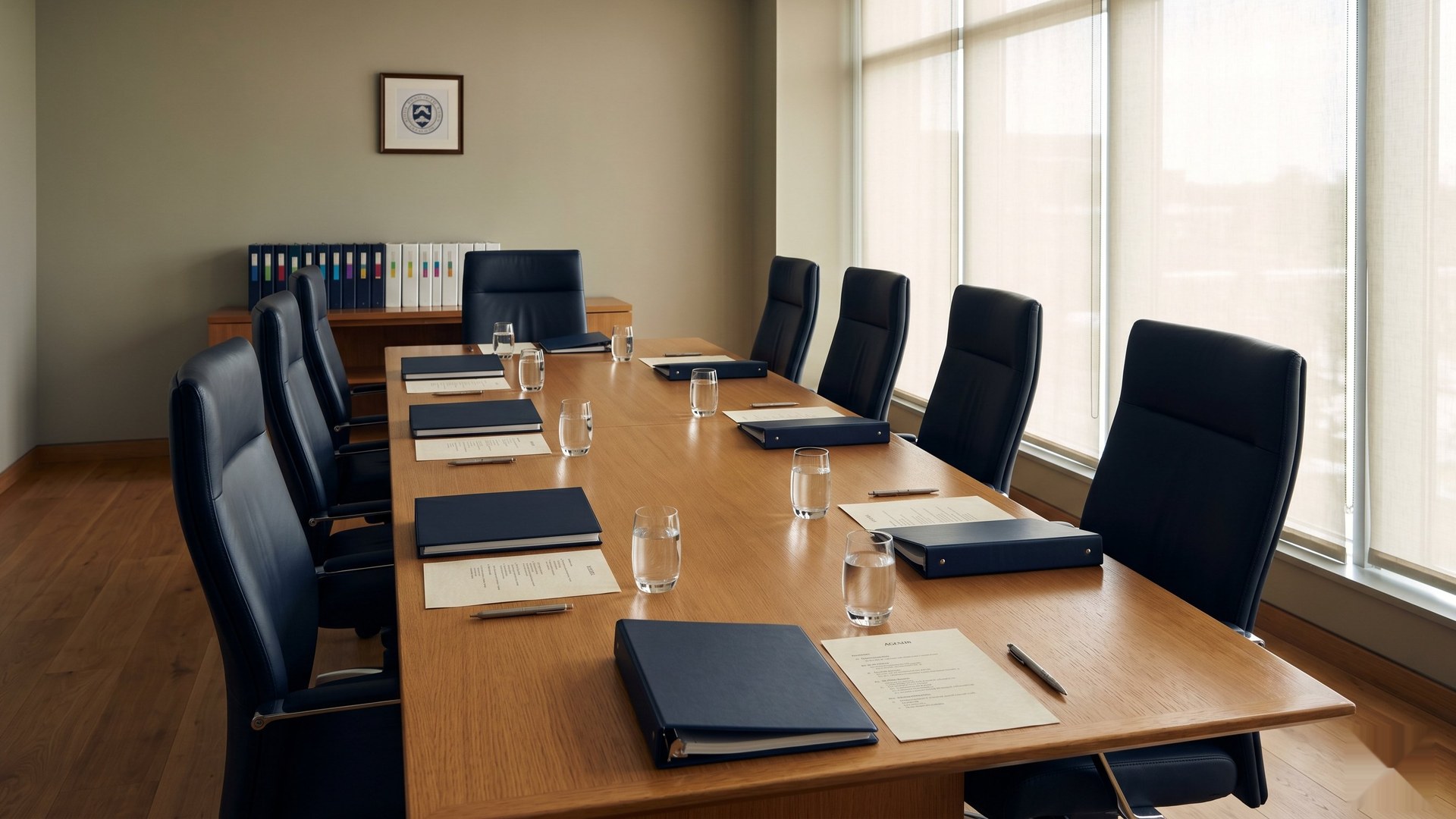
The team room itself matters. Reviewers spend hours there. It needs reliable WiFi, a working printer, water, comfortable seating, a labeled evidence inventory at the entrance, and a single point of contact who can produce additional documents within minutes. Small institutions can absolutely meet this bar — what they need is the time and the structure to build it.
Mock Site Visits: How and When to Run One
A mock site visit is a full-scale rehearsal of your real visit, conducted 3–6 months before the scheduled date by experienced external reviewers who have served on actual accreditor teams.
A useful mock includes the same components your real visit will: a published agenda, a working team room with the actual evidence inventory, interviews with leadership, faculty, staff, students, and board members, observation of operations, and a written exit briefing with findings. The point is not to make the mock pleasant. The point is to expose, in advance, the gaps the real team would expose. Major institutions across the country run mocks before every comprehensive visit — the University of Kansas published its 2025 HLC mock visit walkthrough explicitly to prepare its community for the same questions a real team would ask, and medical schools have used mocks before LCME visits for decades. The structure works.
Three months between mock and real visit is the working minimum. Less than that and you cannot meaningfully address what the mock surfaces. More than six months and the institution may drift from what the mock evaluated.
Mock visit findings cluster predictably across regional and national accreditors: faculty who can describe their courses but not how learning outcomes are assessed at the program level; documentation that exists but is not organized for retrieval; policies that are written but inconsistently practiced; board members who cannot articulate their fiduciary oversight role. None of these are fatal at the mock stage. All of them are fatal at the real visit.
For small institutions with limited internal capacity to organize and pressure-test a mock, Expert Education Consultants conducts mock visits as part of its accreditation partner engagements — your dedicated team runs the agenda, conducts the interviews, writes the exit briefing, and then works with your people on the gaps.
Interview Preparation for Faculty, Staff, Students
Interview preparation is the single most underestimated component of site visit readiness. Peer reviewers verify the self-study by talking to the people who live inside it, and the deficiency rate at first-time accreditation visits correlates more closely with interview performance than with document quality.
Reviewers conduct interviews in groups organized by role. Each group needs role-specific preparation:
- Senior leadership speaks to mission, strategic planning, financial stability, and how the institution makes decisions. They should be able to describe the planning cycle and point to specific decisions data has driven.
- Academic deans and program directors speak to curriculum, faculty oversight, and assessment of student learning. They should describe how learning outcomes are measured at the program level and what the institution has changed in response to the results.
- Faculty speak to teaching, advising, scholarship expectations, and academic freedom. They should be comfortable describing assessment activities in their own courses and the program.
- Staff speak to operations: how the SIS records grades, how the registrar processes transfers, how financial aid is administered, how complaints are handled. Their interviews are short and concrete.
- Students speak to their actual experience. Reviewers want to hear that the mission language matches the daily reality.
- Governing board members speak to fiduciary oversight, the relationship between board and administration, and the board's role in approving major decisions.
The rule that holds across every accreditor: say what you wrote. If the self-study claims something, the people interviewed must be able to confirm it in their own words. This is not memorization — reviewers can tell when answers are scripted. It is fluency. We prepare your people by running structured mock interviews until the answers come naturally and the staff feel ready, not rehearsed.
Site Visit Day-of Logistics
Day-of logistics protect your team's energy and the reviewers' time. Done well, they are invisible. Done poorly, they become the story of the visit.
Practical essentials: a clearly signed team room with a posted day-of agenda; a dedicated institutional liaison whose only job during the visit is reviewer support; reliable WiFi credentials printed and waiting; a working printer in the room; bottled water, coffee, and light snacks throughout the day; meals coordinated on or near campus with the team chair's input; and a quiet space available for private team discussions. The institution covers the team's travel and lodging expenses per the accreditor's policies — HLC, SACSCOC, MSCHE, ACCSC, ABHES, and DEAC all require this and bill the institution either directly or through a visit invoice.
Schedule discipline matters. Each interview block needs to start and end on time so the next group is not pulled out of class or out of a shift unnecessarily. The institutional liaison keeps the agenda moving; the team chair adjusts only when reviewers ask for it. The visit closes with the team chair's exit briefing — an oral summary of what the team observed and what will appear in the written report. This briefing is internal to the institution. It is not recorded, not transmitted beyond the campus, and not shared with the press. You take notes, ask clarifying questions, and prepare for the written report that follows.
Common Site Visit Findings (and How to Avoid Them)
Across all recognized accreditors, the most frequent findings at first-time and reaffirmation visits fall into a predictable set of categories.
- Assessment of student learning at the program level. MSCHE Standard V and HLC Criterion 4 both require organized, systematic assessment with evidence that results inform program change. Findings here usually mean the institution measures something but does not show it influencing decisions.
- Faculty qualifications documentation. Curriculum vitae, transcripts, and credential verification need to be complete, current, and matched to the courses each faculty member is assigned. Gaps here are among the most common findings cited.
- Inconsistency between written policy and observed practice. Policy says transfer credit is reviewed by the program director; in practice, the registrar approves it. Either change the practice or change the policy — but they must match.
- Closing the loop on continuous improvement. Reviewers want to see the cycle: measure, analyze, change, re-measure. Many institutions can show the first half but not the second.
- Governance documentation. Board minutes, conflict-of-interest policies, and bylaws are sometimes incomplete, especially at small private institutions where the board has operated informally for years.
- Substantive change documentation. New programs, new sites, and new delivery modes need to be reported on time. Findings here are entirely avoidable.
The accreditation landscape itself is shifting; the rise of alternative accreditors in 2026 and updated federal expectations have raised the bar on evidence of student learning across the board. The institutions that absorb this best are the ones that build assessment into their normal operating rhythm rather than scrambling it together for the visit.
A useful way to think about findings: every one of them is a sentence in someone else's written report about your institution. The work in the 12 months before the visit is making sure those sentences are short, factual, and few.
Frequently Asked Questions
What happens during an accreditation site visit?
During an accreditation site visit, a team of peer reviewers spends 2–3 days on your campus validating that your institution operates the way your self-study describes. Reviewers interview leadership, faculty, staff, students, and board members; examine evidence files for each standard; observe operations; and close with an exit briefing summarizing what will appear in their written report.
How do I prepare for an accreditation site visit?
To prepare for an accreditation site visit, begin 12 months out, finalize the self-study early, build a complete evidence map keyed to each standard, run a full mock site visit 3–6 months before the real one, conduct role-specific interview preparation for every staff member who may be questioned, and confirm day-of logistics in the final 30 days. The single highest-leverage step is the mock visit — it surfaces the gaps you still have time to close.
How long is an accreditation site visit?
An accreditation site visit typically lasts 2–3 days, varying by accreditor and visit type. HLC comprehensive evaluation visits are typically 1.5 days on campus plus a separate deliberation day. ACCSC and ABHES visits are usually two days. SACSCOC and MSCHE visits run longer, often three to four days, because their on-site committees are validating more standards across larger institutions.
What questions do site visit teams ask?
Site visit teams ask role-specific questions designed to verify what is written in the self-study. Faculty are asked how learning outcomes are assessed and how results inform their teaching. Staff are asked about specific operational processes — how the SIS handles records, how complaints are resolved, how aid is administered. Students are asked about their experience and whether it matches the mission. Board members are asked how they exercise fiduciary oversight. Leadership is asked about strategic planning, financial stability, and institutional decision-making.
What is a mock site visit?
A mock site visit is a full rehearsal of the real accreditation visit, conducted 3–6 months in advance by experienced external reviewers who have served on actual accreditor teams. A useful mock follows a real agenda — interviews by role, evidence review in a working team room, observation of operations, and a written exit briefing with findings. The point is to expose gaps while there is still time to fix them. Institutions that run rigorous mocks rarely receive critical findings on the real visit.
Ready to plan your site visit preparation?
For more information on how to prepare for your accreditation site visit, including a dedicated team that can build your evidence map, run your mock visit, and prepare your people for every interview, contact Expert Education Consultants at +1 (925) 208-9037 or email sandra@experteduconsult.com.