

Opening a University in Florida From Abroad? What the CIE Now Wants to See
By Dr. Sandra Norderhaug | Expert Education Consultants | 8 min read
Non-US owners can open a university in Florida, but the Commission for Independent Education now expects the school to show real American presence and serve Florida students, not just hold a Florida license. At its September 24, 2026 meeting, the Commission approved three foreign-owned applicants only after attaching quarterly enrollment reporting to each provisional license. Plan Florida leadership, a mixed faculty, and Florida enrollment before you file, not after a commissioner asks.
If you live outside the United States and want to open a university in Florida, the paperwork is the easy part. I have helped launch more than 115 institutions, many of them owned by investors in Brazil, Europe, the Middle East, and Asia, and the Florida rules have always been clear and workable for foreign owners. What changed this year is not the rules. It is the question the Commission for Independent Education asks before it votes.
That question is simple: what does Florida get out of this? I watched the Commission ask it three times in one afternoon on September 24, 2026, and I want you to hear the answer before you spend a year and a large budget on an application. If your plan is to run the school from home, read my earlier guide to operating when you are not US-based first, and then read this post, because the ground has shifted under that model.
The rules still welcome foreign owners
Nothing in Florida law stops a non-US citizen from owning a licensed university. The Commission licenses the institution, not the owner’s passport. You need a Florida entity, a Florida facility that meets Rule 6E-2.004(9), qualified administrators, a catalog, financial statements, and faculty files. None of those items asks where you were born.
The faculty rule is just as open. Rule 6E-2.004(7) asks three things of every instructor, no matter where that person lives: a degree at the right level for the courses they teach, official transcripts on file and translated into English if needed, and a notarized CIE Form 402. Form 402 is a sworn statement about the instructor’s education and experience. A professor in Chile or India with those three items meets the rule just as well as a professor in Tampa. My post on hiring faculty and admin staff walks through collecting these files the first time. So the written rules are not the problem. The problem is what the Commission now sees when every page of an application points overseas.
What happened at the September 24, 2026 CIE meeting
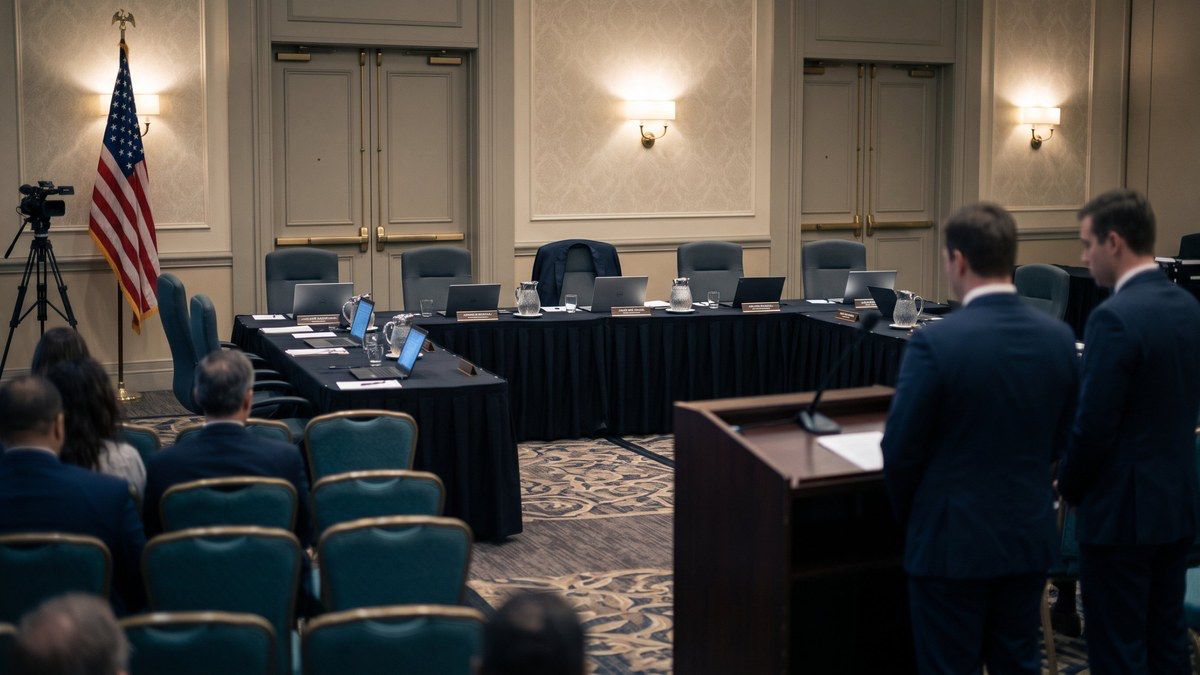
Three new applicants came before the Commission on the same day, and all three had foreign owners, foreign campuses, and mostly overseas faculty. One was a theology school from Brazil that teaches in Portuguese. One already owns three business schools in Europe with about 4,500 students. One listed faculty from Chile, Colombia, Australia, Brazil, and India.
The commissioners asked each applicant the same questions. Where will your students come from? Why are you here if you already have a school at home? Will Florida residents get the same chance to enroll as applicants from Brazil or Europe?
Counsel for the Commission reminded the room that CIE has seen schools set up in Florida and then deliberately exclude Florida residents, and that a Florida license does not allow a school to discriminate by national origin. One commissioner said plainly that the real question was whether this would be a real university in Florida or a mechanism for selling American credentials to people in another country for the prestige. He said the answers he heard worried him more than silence would have. The chair added that the Commission is not in the habit of licensing an international school that serves only international students and brings no educational or economic benefit to Florida.
All three applicants were approved. But each one left with a new contingency and a condition written into the provisional license. Every quarter until the first renewal, each school must report its enrollments, including every student’s address and contact information, so the Commission can see whether Florida residents are actually being served. One school also had to show job placement partnerships within 90 days.
Why the quarterly report decides your annual license
The quarterly report matters because it turns a soft concern into hard evidence. A Florida CIE provisional license lasts one year. Every quarterly report goes straight into the file the Commission reads when it decides whether to grant the annual license. If four reports in a row show zero or near-zero Florida students, the school has handed the Commission the proof it needs to say no.
By that point you have already paid for the application, the facility, the staff, and the learning management system. A missing report, or a late one, is a violation on its own. There is no second application. The data decides.
The five things the Commission now looks at in a foreign-owned application
The Commission reads a foreign-owned application as a whole picture, and five parts of that picture decide whether it looks like a Florida school or a pass-through. Here is how the written rule and the new expectation sit side by side for each one.
One warning here, because I know competitors do it. Expert Education Consultants will not pad a faculty list or a staff list with Americans who will never work for the school. Form 402 is a sworn, notarized statement. Before the annual license is granted, the Commission conducts a site visit, and the examiner compares your faculty files, your learning management system, and your payroll. Names that appear in one place and not the others cost you the license, and they can cost the person who signed the form far more than that.
Where this shift comes from
The questions at this meeting reflect a broader change in how Florida’s leadership approaches licensing. Across many state agencies, Florida has moved toward a strong Florida-first and American-first posture. The CIE commissioners are appointed by the Governor and confirmed by the Florida Senate, and that tone shows up in the questions they ask applicants.
So the test is no longer only whether the paperwork is complete. The test is also who benefits Florida. That question is not written in Rule 6E-2.004, but it is now a real licensing test. An application that looks entirely foreign on paper, with foreign owners, foreign faculty, foreign students, a foreign language of instruction, and a foreign home office, raises every one of those flags at the same time.
Accreditors ask the same question
The same question, whether this is a real American institution, is now being asked by accreditors, and accreditation is what eventually turns a provisional license into a stable annual license and a Title IV future.
The Southern Association of Colleges and Schools Commission on Colleges, known as SACSCOC, asks under Core Requirement 6.1 for a sufficient number of full-time faculty to support the institution’s mission. Standard 6.2.a requires the institution to justify and document the qualifications of every faculty member, and Standard 6.2.b asks for enough qualified faculty for each program. Reviewers look for faculty who are employed and engaged in the institution, not names on a list, and for an institution that controls its own programs rather than acting as a branch of a foreign school.
The Distance Education Accrediting Commission, known as DEAC, requires an institution to have operated under its current legal status, form of control, and ownership for two consecutive years before it will accept an initial application, and it reviews faculty qualifications and how faculty are involved in each course. An institution whose decisions and faculty all sit overseas will struggle to show it is a US institution under US control. My earlier post on DEAC accreditation explains what that review looks like in detail.
The honest path forward
The honest path is Florida leadership, a mixed faculty, Florida students from day one, and paperwork that is never the excuse. International faculty and international students are welcome in that model. Put a Florida academic leader in the chair. Hire some US-credentialed faculty who teach real courses. Use a Florida online notary for the overseas Form 402s so distance never delays a filing. Enroll Florida residents in your first term and report them on time every quarter. If you want to open a college in Florida and keep it open, that is the plan I would build for my own school.
If you are planning a Florida university from outside the United States, talk to Expert Education Consultants before you apply. It is much easier to design American presence into the plan now than to explain its absence to the Commission later.
Frequently asked questions
Can I open a college in the US as a foreigner?
Yes, a foreign national can own and open a college in Florida and in most other states. The Commission for Independent Education licenses the institution, not the owner’s citizenship. What the Commission now looks for is whether the school will actually operate in Florida and serve Florida students, not just carry a Florida address.
What is the Florida CIE application process?
The Florida CIE application process starts with a complete application package, then staff review, then a vote at a public Commission meeting, then a provisional license for one year. During that year the Commission can attach conditions, conduct a site visit, and decide whether to grant the annual license. Foreign-owned applicants should expect direct questions about Florida students and Florida leadership at the meeting.
What is a provisional license?
A provisional license is the first license the Commission for Independent Education grants to a new institution, and it is valid for one year. It lets the school enroll students while the Commission watches how it operates. Conditions can be added to it, such as the quarterly enrollment reports placed on the three applicants in September 2026.
How do I move from provisional to annual license?
You move from a provisional to an annual license by operating in compliance for the provisional year, meeting every condition on the license, and passing the Commission’s site visit. The site visit compares your faculty files, your learning management system, and your payroll. Quarterly reports, where required, become part of the record the Commission reviews.
What credentials do new college faculty need?
Under Florida Rule 6E-2.004(7), each instructor needs a degree at the right level for the courses they teach, official transcripts on file, and a notarized CIE Form 402. Transcripts in another language must be translated into English. These rules apply the same way to US and international faculty.
This article is informational and does not constitute legal advice. Consult qualified counsel about your specific situation.
Plan your Florida university with real American presence
Expert Education Consultants has guided 115+ institutions through licensing and accreditation with a 98% first-submission approval rate, and we design every Florida application for the Commission that exists today, not the one from five years ago. Download the free Open Your University Toolkit to see what a complete Florida application contains, or book a strategy call to talk through your ownership, leadership, and faculty plan before you file.
Call +1 (925) 208-9037 or email sandra@experteduconsult.com.
Dr. Sandra Norderhaug, Founder and CEO, EEC