

QUICK ANSWER
The Commission for Independent Education (CIE) is the Florida state agency that licenses and regulates nonpublic postsecondary educational institutions operating in Florida. Housed within the Florida Department of Education and governed by Chapter 1005, Florida Statutes, the seven-member Commission reviews applications, issues licenses, conducts oversight, and protects students at independent colleges, universities, and career schools across the state.
Introduction
If you are evaluating where to launch a private college, career school, or online university in the United States, Florida sits at or near the top of nearly every shortlist. The reason is partly economic and partly regulatory. Florida has a growing population, a business-friendly tax structure, and one of the more navigable state authorization pathways in the country. But the single most important reason founders, investors, and academic leaders pay close attention to Florida is the agency that gates the door: the Commission for Independent Education.
Most people searching for the term "commission for independent education" are doing so for one of three reasons. They are a founder weighing whether Florida is the right state to incorporate in. They are an out-of-state institution evaluating a Florida campus or online expansion. Or they are an investor or board member doing due diligence on a school that has already filed, or already holds, a Florida license. In all three cases, the same question applies: what is this agency, what does it do, and what does dealing with it actually involve? This guide answers that question. For founders who have moved past the basics and need the operational playbook, our detailed walkthrough of the Florida CIE provisional license covers the documents, fees, and timing involved in a new application.
In the sections that follow, you will learn where the Commission sits within Florida's government, what it is legally empowered to do, who serves on it, which institutions fall under its jurisdiction, the three license types it issues, and how it enforces compliance once your institution is licensed.
Where the Commission for Independent Education Sits in Florida Government
The Commission for Independent Education is a state regulatory body housed administratively within the Florida Department of Education. It is not the same as the State Board of Education, the Florida College System, or the State University System; those bodies govern public institutions. The Commission has its own statutory authority over private, nonpublic postsecondary education and operates with its own membership, staff, and budget.
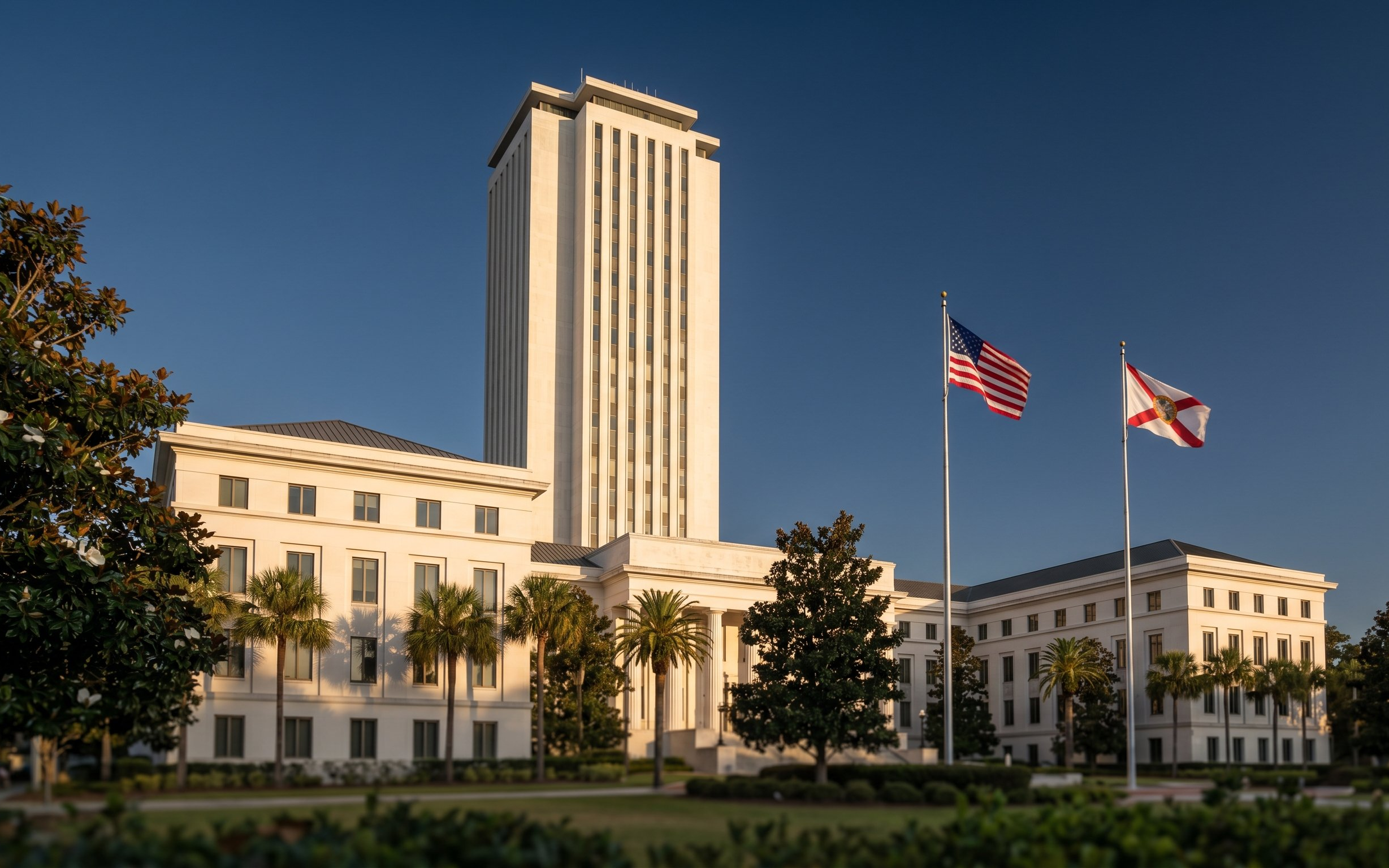
The Commission was established by the Florida Legislature in 2001 through the consolidation of earlier nonpublic-education oversight boards. Its current legal foundation lives in Chapter 1005 of the Florida Statutes, titled "Nonpublic Postsecondary Education," and in Rule Chapter 6E of the Florida Administrative Code. Together, those two documents define who the Commission regulates, what powers it holds, and what institutions must do to obtain and keep a license. The Commission's office is located in Tallahassee at 325 West Gaines Street, Suite 1414, on the campus of the Florida Department of Education.
That placement matters more than it sounds. Because the Commission lives inside the Department of Education, the agency operates with the same professional staff infrastructure, the same public records and rulemaking obligations, and the same procedural rigor as any other state regulator. For institutional founders, this is a feature rather than a bug. It means decisions are documented, criteria are published, and procedures are predictable. If you want a deeper understanding of why founders increasingly choose Florida over comparable states, our analysis of why Florida is the best state to open a new university lays out the licensing, demographic, and financial reasons side by side.
What the Commission for Independent Education Actually Does
The Commission for Independent Education has five core statutory functions: licensure, consumer protection, program improvement, institutional oversight, and data management. Each of these flows from Chapter 1005, Florida Statutes.
Licensure. The Commission reviews and approves applications from new and existing nonpublic postsecondary institutions seeking to operate in Florida. This includes evaluating institutional finances, facilities, governance, curriculum, faculty credentials, admissions practices, refund policies, and student protections. The application process is detailed; our complete walkthrough of the CIE new institution application breaks down each of the 24 exhibits a new applicant must submit.
Consumer protection. The Commission accepts and investigates student complaints against licensed institutions, oversees the Student Protection Fund, and maintains rules around recruitment, advertising, and enrollment agreements. A student who believes a Florida-licensed institution has misled them about job placement, credit transfer, or program content can file a complaint directly with the Commission.
Program improvement. The Commission sets minimum quality standards for curriculum, faculty, facilities, and student services. It does not write curriculum, but it does require institutions to demonstrate that their programs meet documented industry standards and lead to verifiable student outcomes.
Institutional oversight. Once licensed, institutions are subject to continuing reporting obligations, site visits, and rule changes. The Commission renews licenses, monitors compliance, and may impose corrective actions where institutions fall short.
Data management. All licensed institutions must submit annual student data, including enrollment, completion, and placement information. The Commission publishes summary data through its annual report and through the Florida Education and Training Placement Information Program (FETPIP).
Who Sits on the Commission and How It Operates
The Commission for Independent Education consists of seven members who are Florida residents, appointed by the Governor and confirmed by the Florida Senate. The composition of the Commission is fixed by Section 1005.21, Florida Statutes:
- Two representatives of independent colleges or universities licensed by the Commission
- Two representatives of independent, non-degree-granting schools licensed by the Commission
- One member from a public school district or Florida College System institution who is an administrator of career education
- One representative of a college that meets the religious criteria of Section 1005.06(1)(f), Florida Statutes
- One lay member who is not affiliated with an independent postsecondary educational institution
Members serve three-year terms and may be reappointed. The Commission is led by a Chair and Vice Chair elected annually from among the members. Day-to-day operations are managed by an Executive Director and a small professional staff of policy analysts, program specialists, and legal counsel based in Tallahassee.
By statute, the Commission must meet at least four times each fiscal year. In practice, the Commission typically meets on a quarterly cadence, with meeting agendas, minutes, and supporting documents published on the agency website. Meetings are open to the public, and licensure decisions are made through formal Commission votes after staff review and applicant presentation. Founders who attend even one meeting before submitting an application come away with a sharper sense of how the Commission thinks and what it expects to see.
Which Institutions Fall Under CIE Jurisdiction (and Which Don't)
Not every school in Florida is regulated by the Commission for Independent Education. The Commission has jurisdiction over independent, nonpublic, postsecondary educational institutions, while several categories of institutions are explicitly carved out under Section 1005.06, Florida Statutes. Understanding which side of the line your institution falls on is the first practical step in evaluating your obligations.
Two of these exemption categories deserve special attention. Public Florida institutions, including the State University System and the Florida College System, fall under separate state oversight rather than the Commission. And religious institutions in Florida that meet the requirements of Section 1005.06(1)(f), Florida Statutes, and Rule 6E-5.001, Florida Administrative Code, can operate without a Commission license, provided they file an annual sworn affidavit and use a religious modifier in their institutional name. The religious exemption is a meaningful pathway for faith-based institutions, but it carries strict statutory criteria and limits on the types of credentials that may be issued.
If you are unsure where your institution falls, the safest course is to read Section 1005.06 directly and then verify the answer with the Commission staff or with experienced counsel. Misreading this section is one of the most common early-stage mistakes founders make. For a broader view of how Florida licensing compares to other states, our overview of state authorization for new institutions explains the underlying framework that applies in every U.S. jurisdiction.
The Three License Types CIE Issues
The Commission issues three principal license types under Rule Chapter 6E-2, Florida Administrative Code. Each represents a different stage in the maturity of an institution and carries its own conditions, fees, and reporting obligations.
1. Provisional License. The Provisional License is the entry point for new, unaccredited institutions seeking to operate in Florida. It is granted after the Commission staff review the application, verify financial and operational readiness, and present a recommendation to the Commission for a vote. A Provisional License authorizes the institution to begin enrolling students under specific program approvals, with continuing reporting requirements and the expectation that the institution will pursue accreditation within a defined timeframe.
2. Annual License. Once a Provisional licensee demonstrates sustained compliance, financial stability, and program performance, the institution becomes eligible for an Annual License. The Annual License is renewed each year and is the ongoing operating authorization for licensed Florida institutions. It carries continuing reporting, audit, and curriculum-review obligations, and it is the standard license most established nonpublic institutions hold.
3. License by Means of Accreditation (LBMA). Institutions that hold institutional accreditation from a recognized accrediting agency may apply for License by Means of Accreditation. The LBMA recognizes that the accrediting body has already conducted a comprehensive review of the institution's quality, finances, and governance, and it reduces certain duplicate reporting obligations. The LBMA does not eliminate Florida oversight, but it allows the Commission to rely on accreditor judgments for many quality-related determinations.
Most founders begin with a Provisional License, transition to an Annual License after two to three years of operation, and ultimately pursue the License by Means of Accreditation once institutional accreditation has been granted. Each transition is a distinct application, with its own documentation and Commission vote.
How CIE Enforces Compliance and Protects Students
The Commission's enforcement authority is set out in Section 1005.38, Florida Statutes, and in Rule 6E-2.0061, Florida Administrative Code. When an institution falls short of statutory or rule-based requirements, the Commission can impose progressively serious sanctions: written reprimand, monetary fines, mandatory corrective action, reduction to provisional status, probation, denial of license renewal, and ultimately license revocation.
Enforcement is not theoretical. The Commission monitors compliance through several recurring mechanisms:
- Annual student data reporting (due each November 30 for the prior academic year)
- Annual financial audits or reviewed financial statements
- Periodic site visits by Commission staff or contracted specialists
- Mandatory continuing education for designated institutional officers
- Investigation of student complaints filed through the Commission's published process
- Coordination with accreditors and with federal agencies, including the U.S. Department of Education and the Student and Exchange Visitor Program
Beyond enforcement against institutions, the Commission also administers the Florida Student Protection Fund, a financial backstop designed to protect students who paid tuition to an institution that subsequently closed or failed to deliver the program contracted for. Contributions to the fund are required as part of certain licensure applications, and the fund pays refunds and supports orderly teach-out arrangements when a licensed institution closes.
Founders sometimes hear the Commission described as strict. A more accurate description is structured. The Commission publishes its rules, deadlines, and review criteria openly; it staffs its reviews with experienced policy analysts; and it gives applicants written notice of any deficiencies typically within 30 days of staff review. Institutions that submit clean applications, hire qualified faculty, build real student support, and comply with reporting obligations rarely run into enforcement issues. Expert Education Consultants has launched more than 115 institutions and currently maintains a 98% success rate on first-time state authorization and accreditation engagements — a record built on treating CIE's structure as a roadmap rather than an obstacle.
Frequently Asked Questions
What is state authorization for colleges?
State authorization is the legal approval a college, university, or career school must obtain from a state government before it can operate, enroll students, or grant credentials in that state. Each state has its own authorizing agency and its own standards; in Florida, that authority is the Commission for Independent Education for nonpublic postsecondary institutions. State authorization is the foundation on which all other approvals — federal financial aid, SEVP certification, accreditation — are built.
How is state authorization different from accreditation?
State authorization is a legal license issued by a government agency; accreditation is a quality-assurance designation issued by an independent, federally recognized agency. State authorization tells the public that an institution has the legal right to operate; accreditation tells the public that an institution meets recognized academic and operational standards. Most institutions need both, and the two processes run in parallel rather than sequentially. State authorization comes first in time; accreditation typically follows after the institution has operated under its state license long enough to demonstrate sustained quality.
What is the Florida CIE application process?
The Florida CIE application process begins with the submission of a New Institution Application on the Commission's published forms, accompanied by 24 supporting exhibits documenting institutional finances, curriculum, faculty, facilities, governance, and student-protection policies. Commission staff review the application within approximately 30 days and issue written notice of any omissions or deficiencies. Once the application is deemed complete, it is scheduled for consideration at the next regular Commission meeting, where the Commission votes on the Provisional License after the applicant's presentation.
Do online colleges need state authorization in every state?
Yes. Online colleges generally need authorization in their home state and in every other state where they enroll students, unless the home state participates in the National Council for State Authorization Reciprocity Agreements (NC-SARA) and the other state is also a SARA member. Florida is an active participant in NC-SARA, which allows Florida-authorized institutions to enroll students in other SARA states under a single reciprocity framework rather than seeking separate authorization in each state. SARA does not exempt online colleges from authorization in non-SARA states, including California for certain activities.
What is a religious exemption?
A religious exemption is a legal status under which a religious postsecondary institution may operate without obtaining a state license, provided it meets the criteria set by state law. In Florida, the exemption is granted under Section 1005.06(1)(f), Florida Statutes, and Rule 6E-5.001, Florida Administrative Code. The institution must include a religious modifier in its name, restrict its programs to religious subjects, and file an annual sworn affidavit on Commission Form 113. The exemption is renewed annually and does not authorize the institution to issue non-religious credentials or to participate in federal financial aid.
Ready to Launch Your Institution in Florida?
If you are evaluating Florida as the home state for a new college, university, or career school — or if you are weighing where your institution currently stands relative to the Commission's requirements — Expert Education Consultants can walk the path with you from incorporation through licensure and on through accreditation.
For more information about how the Commission for Independent Education process applies to your specific institution, contact Expert Education Consultants (EEC) at +1 (925) 208-9037 or email sandra@experteduconsult.com.

.webp)