

Here’s a number that should stop every education founder in their tracks: by 2028—just two years from now—the first members of Generation Alpha will walk onto college campuses. And they’re not going to arrive the way Gen Z did, gradually discovering AI tools during their sophomore year. These students grew up with AI as background noise. They were using voice assistants for homework before they could drive. They’ve never known a world without smartphones, real-time translation, or algorithmic content feeds. And their expectations for your institution? Fundamentally different from anything higher education has encountered before.
I’m not being dramatic. The data backs it up. Research from AppsAnywhere, surveying over 2,400 students aged 12–16, found that 73% of Gen Alpha students are already using or planning to use AI tools, with 40% relying on ChatGPT specifically for studying. Only 14% want a campus-only experience—the rest expect hybrid or remote options as a default, not an accommodation. And 92% expect their university to provide devices for borrowing or personal use. These aren’t preferences. They’re prerequisites.
So what does this mean if you’re in the early stages of building a new institution—planning your state authorization paperwork, drafting your accreditation application, sketching out your technology budget? It means that the campus you’re designing right now needs to be built for students who don’t exist yet as your customers, but whose expectations are already fully formed. And if your infrastructure, pedagogy, and student services aren’t ready for them, they’ll go somewhere that is.
I’ve spent over two decades helping founders launch postsecondary institutions, and the shift I’m watching now reminds me of the scramble that happened when institutions first had to get serious about online learning. Except this time, the timeline is compressed and the stakes are higher. Let me walk you through what’s coming, what the research actually says, and how to prepare—starting today.
Who Is Gen Alpha, Exactly? And Why Should You Care Right Now?
Generation Alpha refers to children born between roughly 2010 and 2025—the first generation to be born entirely after the launch of the iPhone, the iPad, and Instagram. The term was coined by social researcher Mark McCrindle, and by 2025, this cohort numbered over two billion globally. They’re the children of Millennials, raised in households where smart speakers answered questions, streaming replaced cable, and screens were the default babysitter during a global pandemic that reshaped their formative educational experiences.
Here’s where this gets personal for you as a founder. One in two Gen Alphas is expected to pursue a college degree. That’s an enormous addressable market—and with 90% of surveyed teens saying they want to attend college, the demand is there. But they’re going to evaluate your institution through a fundamentally different lens than Gen Z—and the gap between what they expect and what most campuses currently offer is significant.
The COVID-19 pandemic is a critical piece of this story that doesn’t get enough attention in institutional planning conversations. Gen Alpha experienced remote and hybrid learning during some of the most formative years of their educational development. Many of them spent second, third, or fourth grade learning from a tablet at the kitchen table. This wasn’t ideal—but it permanently recalibrated their sense of what’s normal. They developed habits of self-direction, digital autonomy, and a baseline expectation that learning should always be accessible from anywhere, on any device, at any time. For better or worse, that’s now baked into their expectations.
I was on a call last month with a founder planning a career college in the Southwest. She described her campus design: traditional classrooms, a dedicated computer lab, a physical student services center with walk-in hours. When I asked about her mobile strategy, she paused. “We’ll have WiFi,” she said. I told her that’s like saying you’ll have electricity—it’s a prerequisite, not a strategy. Her incoming students won’t separate their digital lives from their educational lives. They’ll expect those to be the same thing.
Gen Z discovered AI in college. Gen Alpha will arrive already expecting it. Gen Z adapted to hybrid learning during COVID. Gen Alpha will refuse to attend institutions that don’t offer it as standard. Gen Z tolerated clunky student portals. Gen Alpha will judge your institution by whether your app works as smoothly as the ones they use to order food.
Gen Alpha doesn’t view education as a place. They view it as a service—one they expect to access on their terms, across platforms, with the same personalization they experience everywhere else in their digital lives.
If that sounds like a dramatic oversimplification, consider this: 92% of Gen Alpha children started using digital devices before age four. The average Gen Alpha child spends four to six hours daily on screens. And 93% of educators report needing additional training just to keep up with how these students learn and process information. The attention span data is striking—roughly eight seconds on average, which is reshaping not just how students consume content, but how instruction itself needs to be designed.
There’s another dimension that’s easy to overlook. 76% of Gen Alpha students can already code or want to learn, with many self-taught through YouTube tutorials and interactive platforms. 94% believe technology supports different learning styles. These aren’t passive consumers of technology—they’re active builders and evaluators. They’ll arrive on your campus knowing more about certain AI tools than your faculty. That’s not a threat—it’s an opportunity to design learning experiences that leverage what students already know while building the critical thinking and professional judgment that technology alone can’t provide.
What does all of this add up to? A generation that doesn’t need to be taught how to use technology but absolutely needs to be taught how to think critically about it. That’s the pedagogical challenge. And institutions that confuse technical fluency with genuine literacy will find themselves producing graduates who can operate AI tools but can’t evaluate whether the tools are giving them good answers. We’ve covered this distinction extensively in earlier posts in this series, but it bears repeating here because Gen Alpha’s comfort with technology can mask a deeper gap in analytical reasoning that your curriculum needs to address.
Gen Alpha Digital Behavior: What the Research Actually Shows
Let’s cut through the generational hype and look at what we actually know. Because if you’re making six- and seven-figure infrastructure decisions, you need data—not marketing buzzwords.
Device Access and Usage Patterns
AppsAnywhere’s 2025 research on U.S. and UK teens reveals a generation that’s mobile-first by instinct, not by choice. 84% of Gen Alpha students own a smartphone, and 52% use their phone for homework. But here’s the catch: 26% don’t have regular access to a laptop or tablet at home. That’s a significant device gap that most institutional technology plans completely ignore.
This creates a paradox your planning team needs to grapple with. Your incoming students will be intensely technology-dependent but unevenly technology-equipped. They’ll expect to do everything on a phone—but certain academic tasks (coding, data analysis, clinical simulations, graphic design) simply don’t work on a five-inch screen. The institutions that get this right will be the ones that build robust Bring Your Own Device (BYOD) support alongside institutional device-lending programs, not one or the other.
AI Is Already Mainstream for Them
This is the statistic that should reshape your entire technology strategy: two in five Gen Alpha students already rely on ChatGPT to study. Not occasionally, not experimentally—as a regular study tool. By the time they reach your campus, AI won’t be novel technology they’re learning about for the first time. It’ll be infrastructure they expect you to support, govern, and integrate into your pedagogy.
I worked with a founder recently who was building out a nursing program for a new career college. Her technology plan included a generic LMS and campus WiFi. When I asked about AI policy, BYOD support, and mobile-first course design, she looked at me like I was speaking another language. I told her that by the time her second or third cohort enrolls, these won’t be nice-to-haves—they’ll be table stakes. She redesigned her technology budget that week. Smart move.
Learning Preferences and Attention Patterns
The dominant learning style for Gen Alpha is visual and interactive. This generation is extraordinarily comfortable with video content, interactive simulations, and gamified learning experiences. They process visual information faster than text—which isn’t a deficiency, it’s an adaptation to the information environment they’ve grown up in.
The attention span data gets misinterpreted constantly. Yes, Gen Alpha’s average focused attention span is shorter than previous generations. But that doesn’t mean they can’t concentrate. It means they’ve learned to evaluate content quickly and disengage from things that don’t deliver value fast. For your curriculum design, that translates to a need for modular content delivery, frequent interaction points, and assessment designs that leverage short bursts of focused engagement rather than marathon lectures.
Here’s a real example. One institution I advise piloted a microlearning approach in their medical terminology course—breaking 50-minute lectures into three 12-minute modules with embedded quiz questions and AI-powered practice exercises between them. Course completion rates jumped from 72% to 89% in one semester. The content was identical. The delivery matched how students actually learn.
Mobile-First Infrastructure: What “Ready” Actually Looks Like
When I say “mobile-first,” I don’t mean having a responsive website. I mean designing every student-facing system with the assumption that the primary access device is a smartphone. That’s a fundamentally different design philosophy, and it touches everything from your LMS to your financial aid portal to how students access their dorm rooms.
The BYOD Reality
Bring Your Own Device (BYOD) is the technical term for policies that allow—or require—students to use their personal devices for academic work. For Gen Alpha, BYOD isn’t a policy choice. It’s an expectation. But making it work requires infrastructure that most new institutions don’t budget for.
Your campus WiFi needs to support high-density device connections—not just laptops, but phones, tablets, smartwatches, and whatever the next connected device turns out to be. Your LMS needs to deliver a full-featured experience on mobile, not a stripped-down version. Your student portal needs to handle registration, financial aid, advising appointments, and grade access from a phone screen without requiring a desktop.
I’ve seen institutions invest hundreds of thousands of dollars in on-campus computer labs only to discover that students prefer working on their phones in the library. That’s not a student problem—it’s a planning problem. The money would have been better spent on robust WiFi, device lending programs, and cloud-based software subscriptions that work across any device.
Device Lending and Equity
Here’s the equity angle that too many founders miss. Remember that 26% of Gen Alpha students who lack regular access to laptops or tablets? If your institution requires laptop-dependent work—which most academic programs do—you need a device lending program. And 92% of Gen Alpha students expect their university to provide devices to borrow, use, or own.
Practically speaking, this means budgeting for a device fleet. A reasonable starting point for a small institution (200–500 students): 50–100 loaner laptops or Chromebooks, a charging station infrastructure, and a management platform to track devices. Budget $30,000–$75,000 for the initial fleet plus $10,000–$20,000 annually for maintenance and replacement. It sounds like a lot—until you compare it to the enrollment you’ll lose if students can’t complete coursework because they don’t have the right device.
Smart Campus Basics
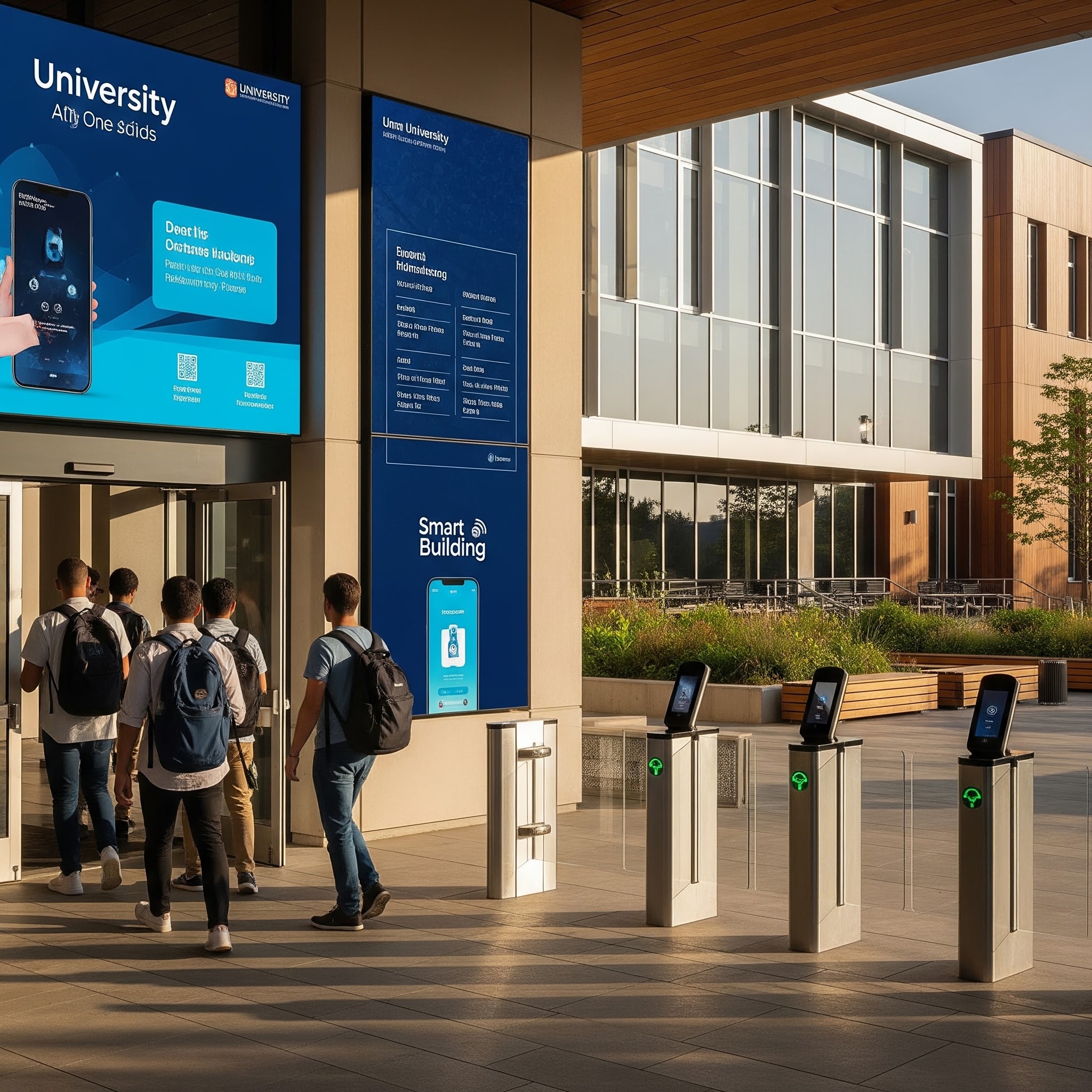
Gen Alpha expects app-based access to everything. That includes building entry (phone-as-key), class schedules, campus maps, dining services, parking, and campus announcements. They don’t want to carry a physical ID card, a separate parking pass, and a meal plan card. They want one app that does everything.
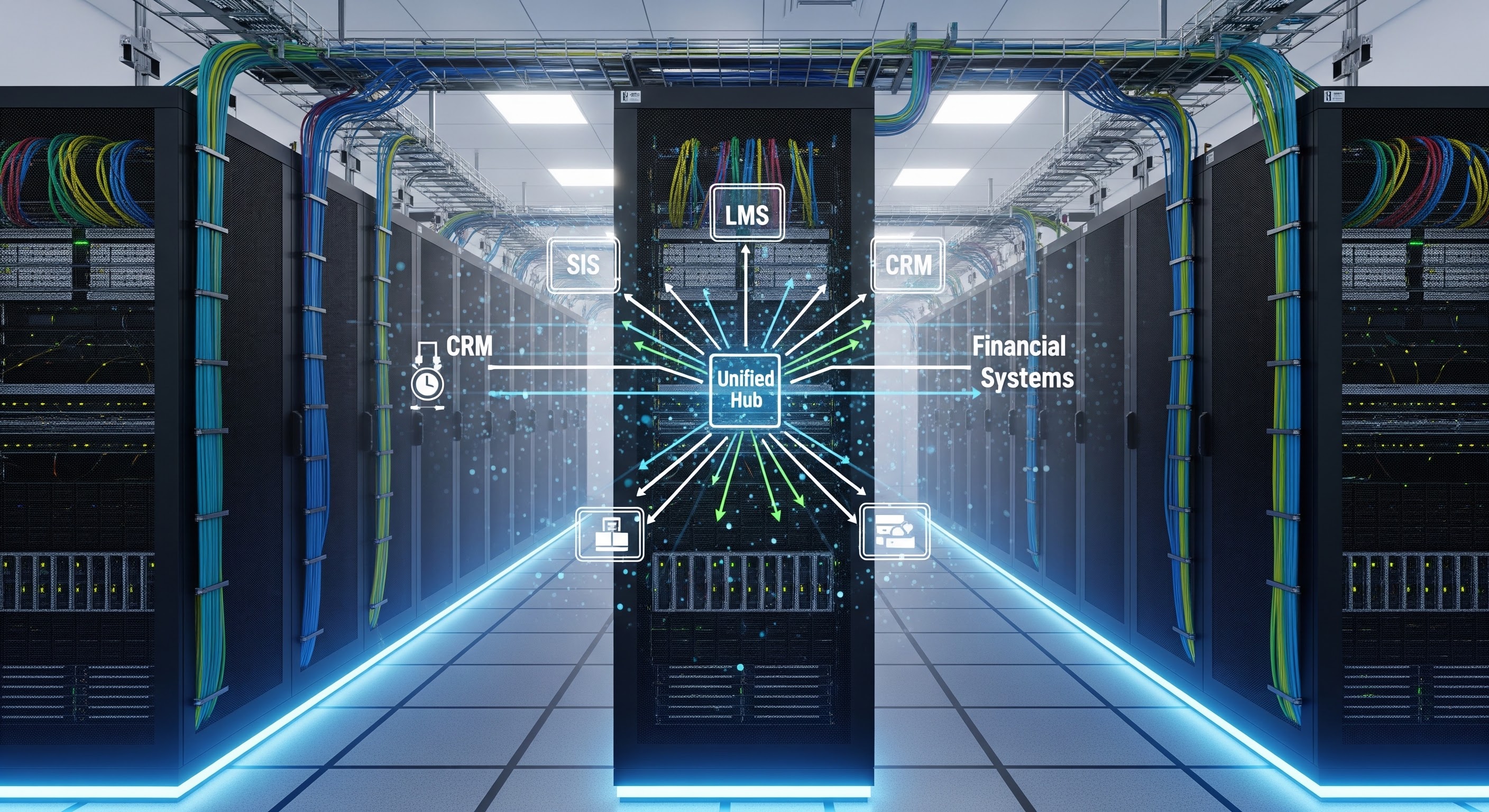
For a new institution, this is actually easier to build from scratch than to retrofit. Partner with a campus management platform early in your planning phase. Companies like Transact, CBORD, and others offer integrated mobile campus solutions that handle credentials, payments, and access from a single app. Building this into your initial technology architecture costs a fraction of what it costs to add it later.
One dimension of smart campus design that’s particularly relevant for Gen Alpha: inclusive design. This generation has grown up with heightened awareness of neurodiversity, and they expect physical and digital environments to accommodate different sensory and learning needs. That means your campus needs quiet study spaces alongside collaborative zones, adjustable lighting in learning areas, and digital platforms that support screen readers, font size adjustments, and alternative input methods. Inclusive design isn’t just an ADA compliance issue—it’s an expectation that Gen Alpha has internalized from their K–12 experience. Institutions that treat accessibility as an afterthought will lose students to those that build it into their DNA.
STEM-focused education programs have seen a 70% increase in enrollment since Gen Alpha started school, and 45% of Gen Alpha children are learning coding before age 10. For institutions offering technical or career-focused programs, this means your incoming students may arrive with more technical preparation than you’re expecting—but potentially less experience with the kind of structured, scaffolded learning that professional competency requires. Design your programs accordingly: don’t waste time teaching them to navigate interfaces, but do invest in teaching them to think systematically about how technology shapes their specific professional field.
Hybrid-by-Default Course Design: The New Baseline
This is the section that makes traditional faculty nervous—and it’s also the one that represents the biggest competitive opportunity for new institutions.
56% of Gen Alpha students prefer hybrid learning models. Only 14% want campus-only instruction. For an education investor, this data should fundamentally reshape your facility planning, faculty hiring, and program design.
What “Hybrid by Default” Actually Means
Hybrid-by-default doesn’t mean offering a few online sections alongside your face-to-face courses. It means designing every course to function seamlessly across modalities. A student should be able to attend a class in person on Monday, participate synchronously from their apartment on Wednesday, and catch up asynchronously on Friday—all within the same section, with the same instructor, without missing a beat.
That’s a significant instructional design challenge. It requires investment in classroom technology (cameras, microphones, dual displays for in-room and remote participants), LMS configurations that support both synchronous and asynchronous engagement, and faculty who are trained in multi-modal instruction. But it’s also a massive differentiator. Institutions that offer genuine hybrid flexibility will capture students who would otherwise choose fully online competitors.
The Faculty Challenge
Here’s the part most people get wrong: hybrid teaching isn’t twice the work if it’s designed properly. But it does require a different skill set than either pure face-to-face or pure online instruction. Faculty need to manage split attention between in-room and remote students. They need to design activities that work in both contexts. And they need technology that doesn’t fail mid-lecture.
Budget $3,000–$8,000 per classroom for basic hybrid-ready equipment (a quality camera, room microphone, and a second display), plus $5,000–$15,000 for faculty professional development in hybrid pedagogy. For a small institution with 10–15 classrooms, you’re looking at $60,000–$150,000 in year one. This is not optional for an institution opening in 2027 or 2028. It’s foundational.
The faculty hiring angle deserves special attention. When you’re recruiting founding faculty for a new institution, you need to evaluate candidates not just on subject-matter expertise but on their comfort with multi-modal instruction. A brilliant content expert who freezes when the classroom camera turns on won’t serve your Gen Alpha students well. Build hybrid teaching demonstrations into your interview process. Ask candidates to deliver a 15-minute micro-lesson that includes both in-room and remote engagement. You’ll learn more about their readiness from that exercise than from any question you could ask on a resume.
It’s worth noting that this isn’t just a U.S. phenomenon. Institutions globally are grappling with the same generational shift. Research from countries including Finland, Singapore, and Australia—all early adopters of technology-integrated education—shows similar patterns of expectation among Gen Alpha students. The OECD’s work on digital education has emphasized teacher co-design principles and learning science foundations that align with what Gen Alpha needs. If your institution serves international students or has global aspirations, understanding the cross-cultural dimensions of this generational shift is essential.
Course Design Principles for Gen Alpha Learners
Rethinking Orientation, Advising, and Student Services
If Gen Alpha views education as a service, then every touchpoint in the student experience needs to function like one. That starts before day one.
Onboarding and Orientation
Traditional orientation—a two-day on-campus event with campus tours, ice-breaker activities, and paper handouts—won’t connect with Gen Alpha the way it connected with previous generations. These students are digital-first. They’ll research your institution on TikTok and YouTube before they ever set foot on campus. Their first impression of your school will come from their phone, not your welcome packet.
What works instead: a hybrid orientation model that starts 2–4 weeks before classes with an interactive online module (AI literacy baseline assessment, campus app setup, academic integrity policy walkthrough, technology readiness check), followed by a shorter on-campus or synchronous virtual experience focused on community building and hands-on practice with institutional tools. One program I helped design reduced orientation no-shows by 35% by making the first week available entirely through mobile.
Build an AI component into your onboarding from day one. Assess incoming students’ AI literacy levels using a brief self-assessment survey. Provide a curated “AI Starter Kit” that introduces your institution’s AI policy, recommended tools, and responsible-use expectations. This sets the tone immediately: AI is welcome here, but it’s governed by clear standards.
Advising for Digital Natives
Gen Alpha will expect advising to work like every other service they use—available on demand, personalized, and accessible from their phone. Scheduled 30-minute office visits with an advisor they’ve met once won’t cut it.
AI-powered advising chatbots can handle the routine queries (degree requirements, course scheduling, prerequisite questions) that currently consume 60–70% of human advisor time. That frees your advising staff to focus on the higher-value interactions—career guidance, personal challenges, complex academic planning—that students need and that AI can’t replicate. Companies like EAB (Navigate), Civitas Learning, and several LMS-integrated tools offer AI-assisted advising platforms that scale with small institutions.
But here’s the caution: never fully automate advising for any student population. Gen Alpha may be digital natives, but they’re also a generation with documented mental health concerns, social skill development questions, and a need for genuine human connection that technology alone can’t satisfy. The model that works is AI for efficiency, humans for relationship. Not one or the other.
Student Services as a Digital Ecosystem
Think about every service your institution provides to students: financial aid, tutoring, career services, counseling, health services, library access, student activities. Now ask: can a student access each of these from their phone, at 10 PM, on a Saturday? If the answer is no for any of them, you’ve got work to do before Gen Alpha arrives.
This doesn’t mean everything needs to be real-time. It means every service needs a digital front door. Financial aid should have a chatbot that answers common FAFSA questions and schedules human appointments for complex cases. Tutoring should be available both through AI-powered platforms (for review and practice) and human tutors (for deeper learning). Career services should offer AI-driven resume review alongside human career counseling.
One ESL program I consulted for built an integrated student services app that consolidated 11 different touchpoints into a single mobile interface. Student satisfaction scores on “access to support” jumped from 62% to 87% in the first year. The technology wasn’t revolutionary—they essentially built a dashboard that linked existing services. But the student experience of seamless access was transformative.
Bridging the Expectation Gap Between Gen Z and Gen Alpha
Here’s a practical challenge that doesn’t get enough attention: for the next several years, your campus will serve both Gen Z and Gen Alpha students simultaneously. Their expectations overlap in some areas but diverge sharply in others. Managing this transition gracefully is critical.
The bridging strategy that works: design for Gen Alpha and you’ll satisfy Gen Z. The reverse isn’t true. A hybrid-ready, mobile-first, AI-integrated campus serves both generations well. But a campus designed only for Gen Z’s expectations will feel outdated to Gen Alpha within their first week.
There’s a marketing dimension here that founders need to think about carefully. Gen Alpha doesn’t respond to traditional recruitment tactics. They’re not reading your view book—they’re watching your TikTok. They’re not attending open house events as their first touchpoint—they’re evaluating your institution through peer reviews, social media presence, and your website’s mobile experience long before they ever contact admissions. If your website takes more than three seconds to load on a phone, or your virtual tour doesn’t work on mobile, you’ve lost them before you had a chance to recruit them.
Authenticity matters enormously to this generation. They’ve grown up immersed in advertising and are remarkably skilled at detecting inauthenticity. Marketing claims about “cutting-edge AI integration” that aren’t backed by genuine infrastructure will backfire. What resonates: real student testimonials, transparent outcome data, genuine demonstrations of how your technology works, and honest communication about both strengths and areas of growth. One institution I advise replaced its polished recruitment videos with student-recorded day-in-the-life content shot on phones. Application inquiries from Gen Z and younger prospects increased 40% in one semester.
I saw this play out at an institution that upgraded its LMS in 2025. The Gen Z students appreciated the improvement. The Gen Alpha early-admits (through dual enrollment) immediately asked why the app didn’t have push notifications, why they couldn’t access grades in real time, and why the tutoring request process required three clicks instead of one. Same improvement, radically different baseline expectations.
What This Means for Your Technology Budget
Let’s get specific about money, because that’s what founders actually need to plan around.
These numbers may seem steep for a startup institution. But compare them to the cost of losing students to competitors who invested in these systems. At an average net tuition of $15,000 per student, losing just 10 students per year to a more tech-ready competitor costs you $150,000 in annual revenue. The technology investment pays for itself if it retains even a modest number of students who would otherwise enroll elsewhere.
What Accreditors and Regulators Will Ask About
If you’re seeking accreditation from any recognized accrediting body—SACSCOC, HLC, WSCUC, ACCSC, ABHES, or others—your Gen Alpha readiness strategy intersects with several accreditation standards you’re already navigating.
Technology infrastructure and support. Accreditors will evaluate whether your institution provides adequate technology resources for students to succeed in your programs. If your programs assume laptop access but 26% of your students don’t have regular access, that’s a gap evaluators will notice. Document your BYOD policy, device lending program, and technology support services.
Distance and hybrid education approvals. If you’re offering hybrid courses—which Gen Alpha essentially demands—you’ll need to address distance education requirements in your accreditation application. Most regional accreditors require a substantive change notification or approval for offering programs with significant online components. Plan for this in your accreditation timeline.
Student services and support. Accreditors evaluate whether student services are accessible and effective for your student population. If your services are only available during business hours, in person, and Gen Alpha students expect 24/7 digital access, you’ll need to demonstrate how your digital service delivery meets their needs.
Assessment of student learning. If you’re redesigning assessments for modular, visual-first, AI-integrated instruction, you need to demonstrate that your assessment methods are valid, reliable, and aligned with your learning outcomes. This is an area where accreditors will push back if you can’t show clear evidence that students are meeting program objectives regardless of delivery modality.
State authorization agencies are also beginning to pay attention. The California Bureau for Private Postsecondary Education (BPPE), among others, has started asking more detailed questions about technology infrastructure and online delivery in institutional approval applications. If your institution will operate in a state with active oversight, build your Gen Alpha technology strategy into your state authorization documentation from the beginning.
What We’re Seeing in the Field: Lessons from Early Movers
The Career College That Redesigned Before Opening
A career college in the Southeast that I advised in 2025 was planning to open an allied health program in 2027. The founding team’s original technology budget was essentially a computer lab and campus WiFi. When we walked through the Gen Alpha data together, they completely restructured their approach. They eliminated the traditional computer lab, invested in a robust BYOD infrastructure with a 75-device lending program, built hybrid capability into every classroom, and integrated an AI-powered student success chatbot into their LMS.
The cost increase over their original plan was about $85,000 in year one. The founding dean initially resisted. But when we modeled the enrollment impact—projecting that hybrid-ready programs would capture students who couldn’t attend a fixed schedule due to work or family obligations—the revenue projections showed the investment paying for itself within two enrollment cycles. Their accreditation consultants also noted that the technology plan significantly strengthened their pre-accreditation application.
The Online University That Missed the Mobile Piece
A fully online institution offering business degrees had invested heavily in high-quality video lectures and an interactive LMS. Their content was excellent—on a laptop. But when they analyzed their usage data in early 2026, they discovered that 47% of student access was coming from mobile devices. And their mobile experience was terrible: videos didn’t resize properly, discussion forums were nearly unusable on phones, and the exam platform required a desktop browser.
They spent six months and roughly $45,000 rebuilding their mobile experience. During that period, they saw a measurable dip in student engagement and a 6% increase in course incompletions. The lesson? Mobile-first isn’t an afterthought. It’s the primary design requirement. Testing every student-facing system on a phone before it launches should be a non-negotiable quality standard.
The ESL Program That Got Social Right
An ESL program serving adult learners in a major metro area recognized that its Gen Alpha-adjacent students (younger adults and dual-enrollment high school students) were already using AI translation tools, AI language practice apps, and social media-based study groups. Instead of fighting this, they built their student engagement strategy around it.
They created a program-branded social channel where students could practice English in a moderated, AI-assisted environment. They integrated AI-powered pronunciation feedback into their mobile-accessible homework platform. And they redesigned their placement testing to include an AI literacy component, so they could match students not just by language level but by digital readiness. Enrollment in their youth-serving programs grew 28% year over year. The key insight: meeting students where they already are—digitally—is more effective than trying to redirect their behavior.
A Practical Preparation Timeline: What to Do and When
If you’re still in the pre-launch phase—planning your institution for a 2027 or 2028 opening—you have the advantage of building all of this in from the start. That’s significantly cheaper and more effective than retrofitting. Use it.
Key Takeaways
Key Takeaways
1. Gen Alpha arrives on campus in 2028 with expectations shaped by a lifetime of AI, smartphones, and on-demand digital experiences. Their expectations are already formed—your institution needs to be ready.
2. 73% already use or plan to use AI tools, and 56% prefer hybrid learning. These aren’t trends to monitor—they’re baseline requirements to design around.
3. Mobile-first isn’t a feature—it’s the primary access point. 52% use phones for homework, and 92% expect device support from their institution.
4. Hybrid-by-default course design is non-negotiable. Build every course to function across in-person, synchronous remote, and asynchronous modalities.
5. The device equity gap is real: 26% lack regular laptop/tablet access. Device lending programs aren’t optional—they’re an equity and accreditation issue.
6. Student services need digital front doors. Advising, financial aid, tutoring, and career services must be accessible from a phone, any time.
7. Design for Gen Alpha and you’ll satisfy Gen Z. The reverse isn’t true.
8. Accreditors will evaluate your technology infrastructure, hybrid delivery approvals, and student services accessibility. Document your Gen Alpha strategy in your accreditation materials.
9. Budget $130,000–$380,000 in year one for Gen Alpha-ready technology. This investment pays for itself through enrollment retention.
10. Start now. Infrastructure decisions take 6–12 months to implement. The 2028 timeline is closer than it feels.
Frequently Asked Questions
Q: When exactly will Gen Alpha students start enrolling in postsecondary programs?
A: The first Gen Alpha students (born in 2010) will turn 18 in 2028 and begin arriving at colleges, universities, and trade schools that year. Some are already entering postsecondary education through dual enrollment and early college programs. If your institution plans to open in 2027 or 2028, Gen Alpha will be among your earliest cohorts. Planning for their expectations now is not premature—it’s essential.
Q: How is Gen Alpha different from Gen Z in terms of technology expectations?
A: Gen Z discovered AI and hybrid learning during their college years—often adapting to tools introduced by the pandemic. Gen Alpha has grown up with AI as a normal part of daily life. They won’t be learning about these tools on your campus—they’ll be evaluating whether your campus supports the tools they already use. The key differences: Gen Alpha expects hybrid as default (not optional), expects device support from institutions (not self-provisioning), and views AI integration as baseline infrastructure rather than innovation.
Q: Do we need to offer fully online programs to attract Gen Alpha?
A: Not necessarily. Only 14% of Gen Alpha students want a fully online experience. The majority—56%—prefer hybrid models that combine in-person and online elements. What they don’t want is a campus-only, in-person-only model with no flexibility. Design for hybrid delivery with genuine modality flexibility, and you’ll meet the majority where they are.
Q: What does a “mobile-first” campus actually require technically?
A: At minimum: high-density campus WiFi that supports multiple devices per student, an LMS with a full-featured mobile experience, a campus app for credentials/payments/scheduling, mobile-optimized student services portals, and cloud-based software that works across any device. Budget $50,000–$150,000 for initial mobile infrastructure depending on campus size, plus ongoing licensing and maintenance costs.
Q: How much should we budget for Gen Alpha readiness?
A: For a small institution (200–500 students), expect $130,000–$380,000 in year one for technology infrastructure, hybrid classroom equipment, device lending, mobile platforms, and faculty training. Annual ongoing costs run $44,000–$103,000. These are rough ranges—your actual costs will depend on institutional size, program mix, and existing infrastructure. But these investments directly impact enrollment competitiveness and student retention.
Q: Will accreditors care about our Gen Alpha readiness strategy?
A: Yes, though they won’t call it that. Accreditors evaluate technology infrastructure adequacy, distance education approvals, student services accessibility, and assessment validity across delivery modalities—all of which are directly impacted by Gen Alpha readiness. Documenting your technology strategy, BYOD policy, and hybrid delivery capabilities strengthens your accreditation application regardless of which accreditor you’re working with.
Q: What’s the biggest mistake institutions make when preparing for Gen Alpha?
A: Two mistakes tie for first place. The first is assuming that current infrastructure is “good enough” because it works for Gen Z. It won’t work for Gen Alpha. The second is over-investing in physical infrastructure (computer labs, dedicated testing centers) at the expense of digital infrastructure (WiFi, mobile platforms, cloud services). Gen Alpha’s primary interface with your institution will be their phone. Design accordingly.
Q: Should we eliminate in-person instruction entirely?
A: Absolutely not. Gen Alpha values in-person experiences—they just don’t want them to be the only option. The research consistently shows that this generation values community, mentorship, and face-to-face connection. But they expect those experiences to be supplemented by—and integrated with—digital tools and flexible delivery. The winning model is “both/and,” not “either/or.”
Q: How do we handle the device equity gap?
A: Build a device lending program into your institutional budget. A fleet of 50–100 loaner laptops or Chromebooks costs $30,000–$75,000 initially, with $10,000–$20,000 annually for replacement and maintenance. Pair this with BYOD support (WiFi, software access, tech help desk) so students who bring their own devices are equally supported. This isn’t optional—it’s an equity issue that accreditors will also evaluate.
Q: What role does AI play in preparing for Gen Alpha?
A: AI is both a tool and an expectation. From an operational standpoint, AI-powered advising chatbots, predictive analytics for student success, and AI-assisted tutoring platforms help institutions serve students more effectively at lower cost. From a student expectation standpoint, Gen Alpha expects AI to be integrated into instruction, assessment, and campus services. Your AI governance policy needs to be robust enough to manage both dimensions.
Q: Are there grants or funding sources available for Gen Alpha readiness upgrades?
A: Yes. The Department of Education’s FIPSE grant program has allocated $169 million specifically for responsible AI integration in postsecondary education—and technology infrastructure is a fundable category. State workforce development funds under WIOA may also support technology investments for career-aligned programs. Additionally, several major technology companies offer educational discounts or grant programs for campus technology. Start by mapping your technology needs to available federal and state funding priorities.
Q: How should we redesign orientation for Gen Alpha students?
A: Move to a hybrid model that starts 2–4 weeks before classes with mobile-accessible online modules (technology setup, AI policy review, AI literacy assessment, campus app onboarding), followed by a shorter in-person or synchronous experience focused on community building. Include an AI onboarding component that introduces your institution’s AI tools, policies, and expectations. Reduce paper-based materials. Make everything available through your campus app.
Q: What about Gen Alpha’s mental health needs?
A: This is a critical area. Gen Alpha has grown up during significant social upheaval, including a global pandemic during their formative years. Mental health awareness is higher in this generation, but so is need. Build digital mental health resources (AI-assisted triage tools, telehealth counseling access, wellness apps) alongside in-person counseling services. Proactive wellness support—not reactive crisis response—is what this generation expects and what accreditors increasingly want to see.
Q: Is it too early to start planning for Gen Alpha if we’re not opening until 2028?
A: It is exactly the right time. Technology procurement, facility design, curriculum development, and accreditation applications all have lead times measured in months or years. If you’re in the planning phase now, every decision you make about infrastructure, pedagogy, and student services should account for the students who will arrive in 2028. Retrofitting is always more expensive than building it right the first time.
Glossary of Key Terms
Gen Alpha isn’t a distant planning horizon. They’re two years away. The institutions that invest in mobile-first infrastructure, hybrid-by-default pedagogy, and AI-integrated student services today will be the ones that capture this generation’s enrollment and earn their loyalty. The ones that wait will find themselves playing an expensive game of catch-up against competitors who built it right from the start.
Current as of April 2026. Regulatory guidance, accreditation standards, and technology platforms evolve rapidly. Consult current sources and expert advisors before making institutional decisions.
If you’re ready to explore how EEC can de-risk your AI-integrated launch, reach out at sandra@experteduconsult.com or +1 (925) 208-9037.