

Quick Answer: Opening a cosmetology school in Florida requires a license from the Commission for Independent Education plus programs that meet Florida Board of Cosmetology hour and curriculum requirements under Chapter 477, Florida Statutes. Accreditation — usually NACCAS, sometimes COE — comes later and unlocks Title IV federal student aid. Because the Commission approves new schools only at scheduled meetings, plan roughly 6–10 months from serious planning to your first cohort.
Florida treats a private cosmetology school as two regulatory projects in one. The school itself is licensed by the Commission for Independent Education — the same body that licenses private colleges — through the standard Florida CIE application process. The programs you teach inside it, meanwhile, must satisfy the Florida Board of Cosmetology’s hour and curriculum standards, because your graduates cannot sit for their own licenses unless they trained at a properly licensed school.
Founders who plan for only one of those two tracks are the ones who stall. This guide walks through the full set of cosmetology school requirements in Florida: the approvals you need, the Board’s clock-hour rules program by program, where cosmetology schools fit in the CIE’s world, what your facility has to demonstrate, the NACCAS accreditation path, and a realistic timeline with the cost categories to budget.
The Approvals a Florida Cosmetology School Needs
A Florida cosmetology school needs two approvals to open — a Commission for Independent Education license and Board-compliant programs — and a third, accreditation, if it ever wants federal student aid. Section 477.023, Florida Statutes is unambiguous: no private school of cosmetology may operate without a license issued by the Commission for Independent Education under Chapter 1005.
Note what is not on this list: a salon license. Cosmetology salons are licensed separately by the Department of Business and Professional Regulation under Section 477.025, and a school license does not come from the DBPR at all. The division of labor is clean — the DBPR’s Board of Cosmetology governs the people and the salons; the Commission for Independent Education governs the schools. If your ambitions run toward degree programs as well, the path changes considerably — see our guide on how to open a college in Florida for that route.
Florida Board of Cosmetology Program Requirements
Florida’s cosmetology school requirements on the program side come straight from Chapter 477: your curriculum must deliver the minimum training hours for each license or registration category you offer, or your graduates cannot practice. The Florida Board of Cosmetology — a seven-member board within the DBPR — sets the curriculum detail by rule on top of these statutory floors.
Two details in Section 477.019 matter for how you design the flagship cosmetology program. First, the 1,200-hour requirement comes with an early-examination provision: your school may certify a student to sit for the licensure examination after 1,000 actual school hours — but a student who fails must then complete the full requirement before testing again. Well-run schools treat the 1,000-hour certification as a privilege for exam-ready students, not a default, because early-test failures cost the student time and the school its pass-rate reputation. Second, eligibility starts young: applicants need only be 16 years old or hold a high school diploma, which shapes both your admissions policies and your compliance obligations toward minor students.
Specialty program hours were set by the Legislature with a stated focus on sanitation and safety, and the full-specialist tier carries a telling alternative: 400 hours “or the number of hours of training required to maintain minimum Pell Grant requirements.” That phrase is your first hint that program length, federal aid eligibility, and accreditation strategy are connected decisions, not separate ones.
Curriculum design — the discipline our university curriculum guide builds from first principles — is where the two tracks physically meet. The program outlines you submit in the CIE application must map, hour for hour, to the categories the Board recognizes — theory instruction, supervised practical services, and the sanitation and safety content the statute names explicitly. A curriculum that reads beautifully but cannot be traced to the Board’s framework invites questions from two agencies at once, so build each program as a table of hours, subjects, and assessment methods before anyone writes a marketing page.
The CIE License: Where Cosmetology Schools Fit
Within the Commission for Independent Education’s world, a cosmetology school is a non-degree career school, and it follows the same licensure architecture as every other private institution the Commission oversees: an application under Rule 6E-2.002 of the Florida Administrative Code, review by Commission staff, and a decision at a scheduled Commission meeting. New-institution applications are due roughly five months before the meeting that will hear them, and the Commission meets six times a year — there is no rolling approval.
The application itself asks you to prove, on paper, that the school you have not yet opened will operate soundly: ownership and financial responsibility, administrative and instructional staffing, program outlines that match the Board’s hour requirements, facility and equipment documentation, and the student-facing policies — enrollment terms, refunds, catalog disclosures — the Commission expects every licensed school to honor. Expert Education Consultants has guided founders through this dual-track build 115+ institution launches deep, and the pattern is consistent: the applications that clear on the first submission are the ones where the CIE file and the Board’s program standards were engineered together from the start. That is the core of our Florida state approval service.
Like every first approval the Commission grants, expect to begin under a provisional license with conditions attached — reporting obligations and operating limits that are entirely manageable if you know they are coming.
Facilities, Kits, and Clock-Hour Rules
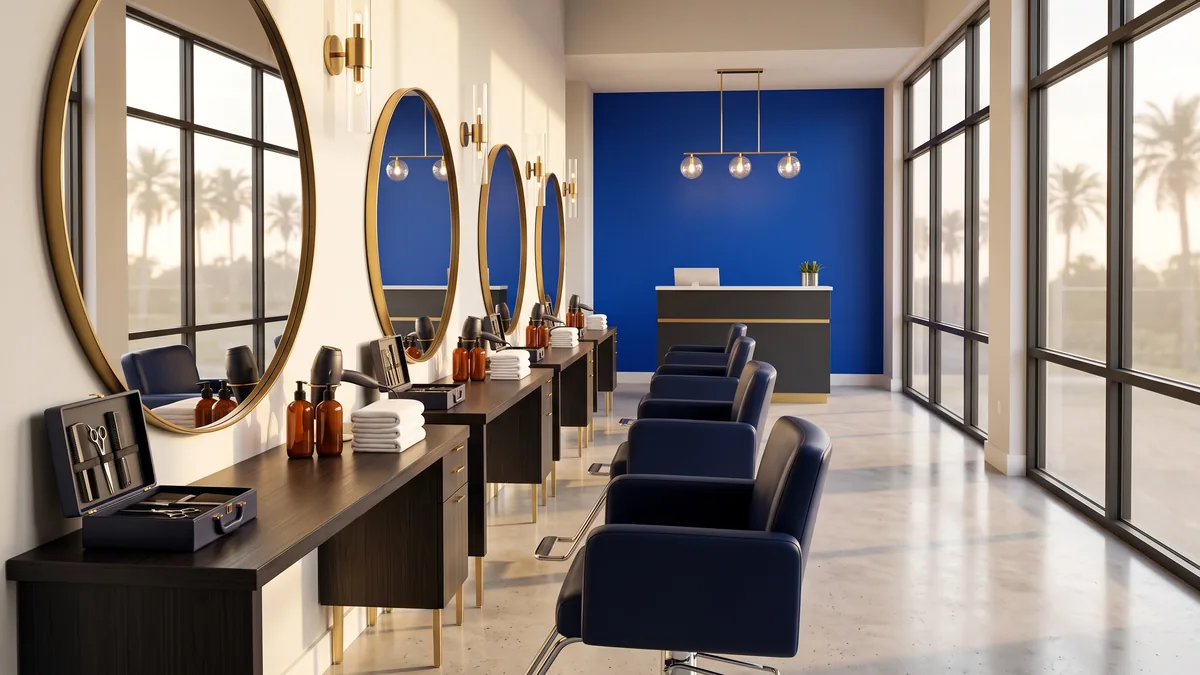
Your facility has to work as both a school and a supervised training floor, and your recordkeeping has to prove every clock hour you certify. Plan the space around instruction first: classroom capacity for theory hours, stations for practical work, and the sanitation infrastructure that a Board-compliant curriculum — one built primarily around sanitation and safety, in the statute’s own words — requires you to teach and model.
Clock-hour integrity deserves more attention than most founders give it. When your school certifies that a student completed 1,200 hours — or certifies exam eligibility at 1,000 — that certification rests entirely on your attendance records. Timekeeping systems, make-up-hour policies, and leave-of-absence documentation are not administrative trivia; they are the evidence behind every certification your school signs. Build the recordkeeping system before the first student clocks in, not after the first records request.
Student kits sit in the same category. Kits, supplies, and equipment charges belong in your enrollment agreement and catalog with exact costs and refund treatment spelled out, because they are among the first documents a regulator reads when a student complaint arrives.
Staffing follows the same logic, and our guide to hiring faculty and admin covers the file-building discipline in depth. Your CIE application documents who will administer the school and who will teach in it, and your practical training floor needs qualified, licensed professionals supervising student services at all times. Decide early whether your opening program menu matches the instructors you can realistically hire in your market — a beautiful nail-specialty classroom is a liability if the region’s experienced professionals are all committed to salon chairs. Instructor recruitment consistently takes longer than founders budget, and it belongs on the critical path next to buildout, not after it.
The NACCAS Accreditation Path (and When COE Fits)
NACCAS — the National Accrediting Commission of Career Arts & Sciences — is the specialized accreditor for cosmetology arts and sciences, and accreditation by a recognized agency is what opens the door to Title IV federal student aid. You do not need NACCAS accreditation to open or operate under your CIE license; you do need it, or an equivalent recognized accreditor, before federal aid can ever flow to your students.
Under NACCAS’s published Rules of Practice and Procedure, a new school’s route runs through candidate status first: a candidacy period — capped at two years — during which the school implements NACCAS standards in daily operation, followed by the Application for Initial Accreditation, an institutional self-study, an on-site evaluation, and a Commission decision. NACCAS’s process documents indicate initial on-site evaluations are typically scheduled within a few months of a complete application. The rules also carve out an exception worth knowing in acquisition scenarios: owners of an existing NACCAS-accredited institution may bypass candidacy for a new school — one of several reasons buying a licensed, accredited school can beat building one.
Treat the candidacy period as the point of the exercise rather than a waiting room. Candidacy exists so a school can run NACCAS’s standards live — publishing accurate catalogs, tracking completion and licensure outcomes, administering refunds correctly — and generate the operating record the self-study will later describe. Schools that use those months to build clean data systems walk into the initial evaluation with evidence; schools that idle through them arrive with assertions.
COE — the Council on Occupational Education — fits a different profile: schools whose program mix extends beyond cosmetology arts into broader career fields such as allied health. If your five-year plan includes programs a cosmetology-specialized accreditor will not cover, weigh the COE accreditation route before you build your first self-study, because switching accreditors mid-stream is expensive in every currency that matters. Either way, position accreditation as a journey your school starts preparing for at launch — collecting the enrollment, completion, and placement data accreditors measure — not a transaction you attempt in year three with two years of missing records.
Timeline and Costs
Plan roughly 6–10 months from serious planning to your first cohort, with the Commission’s meeting calendar as the spine of the schedule. The sequence that drives the timeline: two to four months to assemble the CIE application, curriculum, and facility plan; filing by the new-institution deadline roughly five months before your target Commission meeting; buildout, staff hiring, and Board-aligned curriculum finalization during the review window; then the decision at the meeting itself. The Commission for Independent Education publishes every meeting date and filing deadline on its official calendar — pick your target meeting first and build the plan backward from its deadline.
On costs, budget in categories rather than chasing a single number: state application and licensure fees; the surety or financial-responsibility requirements attached to licensure; facility lease and buildout with stations and sanitation infrastructure; equipment and student kits; instructor salaries ahead of revenue; and, later, accreditation application, self-study, and site-visit costs. The line founders most often underestimate is the carrying cost of the calendar itself — rent and payroll that run while you wait for a scheduled Commission meeting. With a 98% first-submission approval rate across our client applications, Expert Education Consultants’ strongest argument for engineering the file right the first time is exactly that carrying cost: a deferred application is two more months of rent.
Model revenue with the same calendar honesty. Tuition does not arrive the day the license does: enrollment marketing can only start in earnest once you can name a start date, first cohorts are usually small, and a 1,200-hour program means your earliest graduates — and their word-of-mouth — are the better part of a year behind your opening. Founders who capitalize the school through month twelve, rather than month six, give themselves room to make decisions on quality instead of cash flow.
Frequently Asked Questions
What is the Florida CIE application process?
Florida’s CIE application process runs on a fixed cycle: you file a complete application under Rule 6E-2.002 of the Florida Administrative Code by the posted deadline, Commission staff review the file, and the Commission decides it at a scheduled meeting. New-institution applications are due roughly five months before the meeting that will hear them. For a cosmetology school, the application must also show programs that meet the Board of Cosmetology’s hour requirements.
How do I open a cosmetology school in Florida?
You open a cosmetology school in Florida by obtaining a Commission for Independent Education license and building programs that meet Florida Board of Cosmetology hour standards. In practice that means designing Board-compliant curricula, documenting your facility, staff, finances, and student policies in the CIE application, filing by the deadline for a scheduled Commission meeting, and preparing to operate under an initial provisional license. Accreditation comes later if you want Title IV eligibility.
Does a cosmetology school need accreditation?
No — a Florida cosmetology school can open and operate on its Commission for Independent Education license alone. Accreditation by a recognized agency such as NACCAS becomes necessary when the school wants access to Title IV federal student aid, and many schools pursue it for the credibility and enrollment advantages as well. The right time to start preparing is at launch, when the outcome data accreditors measure begins accumulating.
How long does it take to open a beauty school?
Most founders should plan roughly 6–10 months from serious planning to a first cohort in Florida. The single biggest driver is the Commission for Independent Education’s meeting calendar: new-institution applications are due about five months before the scheduled meeting that decides them, and application preparation typically takes two to four months before that. Facility buildout and instructor hiring run in parallel during the review window.
What is NACCAS accreditation?
NACCAS accreditation is institutional accreditation from the National Accrediting Commission of Career Arts & Sciences, the specialized accreditor for cosmetology arts and sciences recognized by the U.S. Department of Education. New schools first complete a candidacy period of up to two years, then pursue initial accreditation through a self-study, an on-site evaluation, and a Commission decision. It is the most common gateway for cosmetology schools seeking Title IV federal student aid.
This guide discusses Florida statutes and administrative rules; it is informational, not legal advice.
Build Your School on Both Tracks at Once
The schools that open on schedule are the ones that treat the CIE license and the Board’s program standards as one engineering project. Download the free Open Your University Toolkit to see the full launch sequence, or book a strategy call to map your program design, application file, and target Commission meeting with the team that builds both tracks together.
For more information about how to open a cosmetology school in Florida, contact Expert Education Consultants (EEC) at +1 (925) 208-9037 or email sandra@experteduconsult.com.